
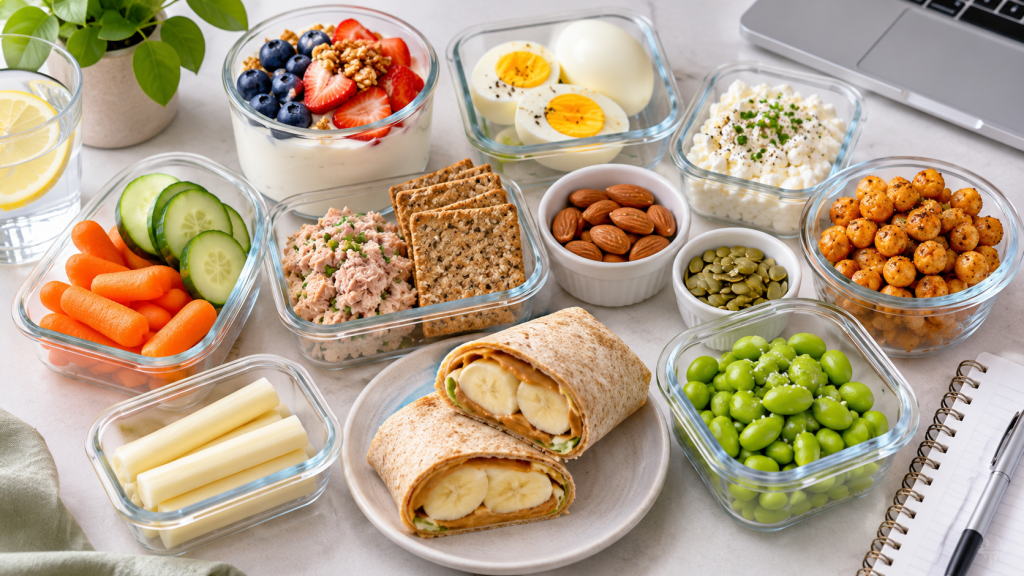
A busy workday can make even a simple snack feel like one more thing to plan. You might have back-to-back meetings, a short lunch break, or a long commute that leaves little time to think about food.
When hunger hits between meals, it’s tempting to grab whatever is nearby. Sometimes that’s a bag of chips from the vending machine or a sweet coffee drink that doesn’t quite satisfy your appetite.
Having a few high-protein snacks for work ready can make those moments easier.
The good news? You don’t need expensive protein bars, complicated recipes, or a refrigerator full of specialty ingredients. Everyday foods such as eggs, yogurt, cottage cheese, beans, tuna, and peanut butter can help you put together simple, protein-rich snacks.
Below are 15 practical ideas for office workers, commuters, and anyone who needs something convenient during a busy day.
Table of Contents
Why Choose Protein-Rich Snacks at Work?
Protein is an essential nutrient that helps the body build and repair tissues. Including protein-rich foods in your meals and snacks can also help you create a more balanced eating routine.
But protein isn’t the only thing that matters.
A snack that combines protein with fiber-rich carbohydrates, fruits, vegetables, or healthy fats can provide a wider variety of nutrients.
For example, pairing plain Greek yogurt with berries gives you protein alongside fruit. Whole-grain crackers with tuna offer a combination of protein and carbohydrates.
The Centers for Disease Control and Prevention recommends keeping nutritious snack options available at home or work so they’re easy to choose when hunger strikes.
You don’t have to eat a high-protein snack every day, and you don’t need to track every gram. The goal is to have useful options that fit your appetite, preferences, and schedule.
How Much Protein Should a Work Snack Have?
There isn’t one protein amount that suits everyone.
As a practical shopping guideline, you might look for snack combinations that provide around 10 grams of protein or more. That’s a convenient planning benchmark, not an official definition of a high-protein food or a personal nutrition target.
Some options below provide considerably more protein, depending on their portions and ingredients.
When buying packaged foods, check the Nutrition Facts label for:
- Protein per serving
- Serving size
- Added sugars
- Sodium
- Saturated fat
Protein amounts can vary widely between brands, even for similar products.
The FDA’s Nutrition Facts guidance explains how to compare packaged foods using their labels.
With that in mind, here are 15 easy options to try.
15 Easy High-Protein Snacks for Work
1. Plain Greek Yogurt With Berries and Pumpkin Seeds
<text> </text>
Greek yogurt is one of the easiest protein-rich snacks to bring to work. It requires almost no preparation and works well as a midmorning or afternoon snack.
What you’ll need:
- ¾ to 1 cup plain Greek yogurt
- A small handful of blueberries or strawberries
- 1 tablespoon pumpkin seeds
- Optional cinnamon for flavor
How to prepare: Spoon the yogurt into a small container. Pack the berries and pumpkin seeds separately, then add them when you’re ready to eat.
Budget-friendly tip: A larger tub of plain yogurt may cost less per serving than individual cups. Compare unit prices at your grocery store.
Workday tip: Keep refrigerated until you’re ready to eat. Choose unsweetened yogurt if you prefer to control the sweetness yourself.
2. Cottage Cheese With Cherry Tomatoes and Whole-Grain Crackers
Cottage cheese is a convenient protein source, particularly for people who prefer savory snacks.
It pairs well with fresh vegetables and whole-grain crackers, making a simple alternative to packaged snack boxes.
What you’ll need:
- ½ to ¾ cup cottage cheese
- A handful of cherry tomatoes
- Whole-grain crackers
- Black pepper or dried herbs
How to prepare: Place the cottage cheese in a sealed container and pack the crackers separately so they stay crisp.
Add pepper or herbs just before eating.
Budget-friendly tip: Compare larger containers with single-serving cups. Check sodium levels when choosing a brand.
Workday tip: This snack needs refrigeration or an adequately chilled insulated lunch bag.
3. Two Hard-Boiled Eggs With Baby Carrots
Hard-boiled eggs are inexpensive, easy to prepare ahead of time, and naturally rich in protein.
They also make a convenient addition to a packed lunch.
What you’ll need:
- 2 hard-boiled eggs
- A handful of baby carrots
- Optional black pepper or paprika
How to prepare: Cook the eggs ahead of time, cool them promptly, and store them in the refrigerator.
Pack the eggs with washed baby carrots for a simple combination of protein and vegetables.
Budget-friendly tip: Buying eggs by the dozen is often more economical than purchasing ready-made egg snack packs.
Workday tip: Keep boiled eggs cold until eaten. Don’t leave them sitting on your desk all morning.
4. Tuna With Whole-Grain Crackers
If you enjoy savory snacks, tuna can be a practical choice.
Shelf-stable tuna pouches are particularly convenient because they don’t require preparation before opening.
What you’ll need:
- 1 single-serving tuna pouch
- Whole-grain crackers
- Optional lemon juice or black pepper
How to prepare: Pack an unopened shelf-stable tuna pouch with crackers. Open the pouch when you’re ready to eat.
You can add a little lemon juice if you like a brighter flavor.
Budget-friendly tip: Compare the unit price of tuna pouches with canned tuna. Both can work, depending on your storage and serving needs.
Workday tip: Choose lower-sodium varieties when available, and follow the package’s storage directions. Once opened, tuna is perishable.
5. Shelled Edamame With Lemon and Seasoning
Edamame, or young soybeans, provides plant-based protein and fiber.
Frozen shelled edamame is widely available in many US grocery stores and can be prepared in minutes.
What you’ll need:
- ¾ to 1 cup cooked, shelled edamame
- Lemon juice
- Garlic powder or black pepper
- Optional chili flakes
How to prepare: Cook according to the package directions, then cool promptly.
Add lemon juice and seasonings before packing.
Budget-friendly tip: Frozen edamame can be a cost-effective option because you can prepare only the amount you need.
Workday tip: Keep prepared edamame chilled. You can eat it cold or reheat it if your workplace has a microwave.
6. Crunchy Roasted Chickpeas and Pumpkin Seeds
For people who enjoy something crunchy, this combination offers an alternative to ordinary chips.
Chickpeas provide plant protein and fiber, while pumpkin seeds add more protein and texture.
What you’ll need:
- A portion of crunchy roasted chickpeas
- 2 tablespoons roasted pumpkin seeds
- Optional smoked paprika or garlic seasoning
How to prepare: Combine commercially packaged, shelf-stable roasted chickpeas and pumpkin seeds in a small container.
Budget-friendly tip: Buying larger packages and portioning them into reusable containers can be more affordable than individual snack bags.
Workday tip: Properly packaged shelf-stable versions are convenient for desk storage. Homemade roasted chickpeas should be refrigerated unless prepared and stored using a validated shelf-stable method.
7. Peanut Butter and Banana on Whole-Grain Bread
Sometimes the simplest foods make the most practical snacks.
Peanut butter and banana on whole-grain bread require very little preparation and are easy to customize.
What you’ll need:
- 2 slices whole-grain bread
- 2 tablespoons peanut butter
- ½ banana
- Optional cinnamon
How to prepare: Spread peanut butter on the bread and add sliced banana.
Make a sandwich or fold each slice in half for a smaller snack.
Budget-friendly tip: Store-brand peanut butter and whole-grain bread can be inexpensive pantry staples.
Workday tip: For a fresher texture, pack the banana separately and assemble the sandwich shortly before eating. This is also a useful option when a workplace refrigerator isn’t available.
8. String Cheese With Almonds and Grapes
A snack box doesn’t have to come from the grocery store’s refrigerated convenience section.
You can make a similar combination yourself with three everyday ingredients.
What you’ll need:
- 1–2 string cheese sticks
- A small handful of almonds
- Fresh grapes
How to prepare: Wash the grapes and pack them separately from the almonds. Include the cheese in the chilled section of your lunch bag.
Budget-friendly tip: Buying a larger package of string cheese and a bag of plain almonds may reduce the cost per serving.
Workday tip: Cheese and washed grapes should be kept appropriately chilled. If nuts aren’t allowed at your workplace, substitute a suitable seed-based option and check the protein amount.
9. Chicken and Hummus Mini Wrap
A small chicken wrap can work well when you want something more substantial than a handful of nuts.
It’s also a practical way to use safely stored leftover cooked chicken.
What you’ll need:
- About 2 ounces cooked chicken
- 1 small whole-wheat tortilla
- 1–2 tablespoons hummus
- Sliced cucumber or lettuce
How to prepare: Spread hummus over the tortilla, add chicken and vegetables, then roll tightly.
Cut into two pieces for easier packing.
Budget-friendly tip: Use leftover home-cooked chicken rather than buying prepackaged chicken strips.
Workday tip: Keep the wrap refrigerated or in a properly chilled lunch bag until it’s time to eat.
10. Seasoned Tofu Bites With Peanut-Lime Dip
Tofu can be a useful protein source for anyone who wants more plant-based options.
Firm or extra-firm tofu works particularly well because it holds its shape after cooking.
What you’ll need:
- About 4 ounces firm tofu
- A little olive or other cooking oil
- Garlic powder or paprika
- 1 tablespoon peanut butter
- Lime juice and water for the dip
How to prepare: Cut drained tofu into small cubes, season, and bake or pan-cook until lightly browned.
Mix peanut butter, lime juice, and a little water into a dip.
Cool the tofu promptly and pack the sauce separately.
Budget-friendly tip: A block of tofu can provide several snack portions, often at a reasonable cost.
Workday tip: Store prepared tofu and dip cold. Use sunflower seed butter if appropriate for a peanut-free version.
11. Lemon Lentil Salad Cups
Lentils are useful for budget-friendly meal preparation because they’re versatile, filling, and contain plant-based protein and fiber.
A small lentil salad makes a good savory afternoon snack.
What you’ll need:
- ¾ cup cooked lentils
- Chopped cucumber
- Diced bell pepper
- Lemon juice
- A little olive oil
- Black pepper
How to prepare: Combine the lentils and vegetables in a container.
Mix lemon juice, olive oil, and pepper separately, then add the dressing before eating.
Budget-friendly tip: Dried lentils are often economical, while canned lentils are convenient when preparation time is limited. Rinse canned lentils if you’re trying to reduce sodium.
Workday tip: Refrigerate the prepared salad and pack it chilled.
12. Plain Skyr With Oats and Fruit
Skyr is a thick, yogurt-style dairy product that commonly contains a substantial amount of protein per serving.
Its creamy texture pairs nicely with oats and fruit.
What you’ll need:
- 1 serving plain skyr
- 2 tablespoons rolled oats
- Sliced strawberries or peaches
- Optional cinnamon
How to prepare: Add the oats and fruit to the skyr shortly before eating.
If you prefer softer oats, mix them in earlier and keep the container refrigerated.
Budget-friendly tip: Compare skyr with plain Greek yogurt. Either can work, and the more affordable choice may depend on local grocery prices.
Workday tip: Keep refrigerated and check the label for protein and added sugars.
13. Salmon With Whole-Grain Crackers and Cucumber
Shelf-stable salmon pouches offer another convenient seafood option for work.
They require little preparation and can be paired with simple ingredients.
What you’ll need:
- 1 single-serving shelf-stable salmon pouch
- Whole-grain crackers
- Cucumber slices
- Optional lemon juice
How to prepare: Pack the unopened salmon pouch separately from the crackers and cucumber.
Open it at snack time and assemble small cracker bites.
Budget-friendly tip: Compare canned salmon with single-serving pouches. Canned varieties may offer better value when you need several portions.
Workday tip: Check sodium levels and follow package instructions. Refrigerate cucumber slices and any leftover opened salmon promptly.
14. Roasted Soy Nuts With Dried Fruit
Roasted soy nuts are a convenient plant-protein snack that can be kept in a desk drawer when packaged for shelf storage.
They have a crunchy texture and pair well with fruit.
What you’ll need:
- About ¼ cup roasted soy nuts
- A small portion of unsweetened dried apricots, raisins, or cranberries
How to prepare: Portion the soy nuts and dried fruit into a reusable container.
That’s all the preparation required.
Budget-friendly tip: Compare prices in the bulk-food section or larger packages when available.
Workday tip: Look for unsalted or lightly salted varieties. Check the label if you need to avoid soy.
15. Overnight Oats With Greek Yogurt
Overnight oats can be prepared the evening before work, making mornings less rushed.
Adding Greek yogurt makes the mixture more protein-rich than oats prepared with water alone.
What you’ll need:
- ½ cup rolled oats
- ½ cup plain Greek yogurt
- ½ cup dairy or fortified soy milk
- Cinnamon
- Optional berries or chopped fruit
How to prepare: Combine the oats, yogurt, milk, and cinnamon in a container.
Cover and refrigerate overnight. Add fruit in the morning or just before eating.
Budget-friendly tip: Rolled oats are a versatile pantry ingredient. Use them for breakfast, snacks, and homemade oat-based recipes.
Workday tip: Keep the prepared oats refrigerated or cold in an insulated lunch bag.
Best High-Protein Snacks for Work Without a Refrigerator
Not every workplace has a refrigerator.
If you work outdoors, travel frequently, or spend your day moving between locations, shelf-stable foods can make snack planning easier.
Good options include:
- Unopened shelf-stable tuna or salmon pouches with crackers
- Peanut butter sandwiches made with suitable shelf-stable ingredients
- Commercially packaged roasted chickpeas and pumpkin seeds
- Roasted soy nuts
- Shelf-stable protein-rich snack products, following package directions
Be careful with foods labeled refrigerate after opening. An unopened shelf-stable product may be safe at room temperature, but that doesn’t mean it remains safe unrefrigerated after opening.
For dairy products, cooked eggs, chicken, tofu, and other perishable snacks, use a refrigerator or an insulated lunch bag with adequate cold sources.
How to Pack High-Protein Snacks Safely
Convenience matters, but so does food safety.
A snack that tastes good at home isn’t necessarily safe after sitting in a warm car or on a desk for several hours.
According to FoodSafety.gov, perishable foods should generally not be left unrefrigerated for more than two hours. When temperatures are above 90°F, that limit drops to one hour.
The USDA also recommends using at least two cold sources when packing perishable food in an insulated lunch bag.
A few practical habits can help:
- Pack cold foods last. Take refrigerated snacks out just before leaving home.
- Use an insulated lunch bag. Include sufficient frozen gel packs or other appropriate cold sources.
- Keep wet and crunchy foods separate. This helps crackers, nuts, and bread maintain their texture.
- Avoid leaving snacks in a hot car. Temperatures can rise quickly, especially during warm weather.
- Follow package instructions. Check storage directions, use-by dates, and refrigeration requirements.
If a perishable snack has been kept at an unsafe temperature for too long, discard it rather than relying on smell or taste.
How to Keep Work Snacks Affordable
You don’t need a collection of expensive products to eat more protein.
A few basic shopping habits can make a difference.
Choose Ingredients You Can Use More Than Once
Instead of purchasing ingredients for 15 different snacks, select a few staples that work in several combinations.
For example:
- Greek yogurt works with fruit, oats, or seeds.
- Eggs can be served alone or alongside vegetables.
- Peanut butter pairs with whole-grain bread, bananas, and oatmeal.
- Lentils can become a snack salad or part of lunch.
- Frozen edamame can be prepared in small portions.
This reduces the number of ingredients you need to keep on hand.
Compare Unit Prices
Individual snack cups and convenience packs can be useful, but they aren’t always the most economical option.
When shopping, compare the price per ounce or pound rather than relying only on the package price.
A larger container isn’t necessarily a better deal if part of it will go to waste, so think realistically about how much your household will use.
Use Store Brands When They Fit Your Needs
Store-brand yogurt, canned fish, beans, oats, and nut butters can be practical alternatives to premium products.
Compare ingredient lists and Nutrition Facts labels rather than assuming a higher price means better nutrition.
Keep Two Backup Snacks Available
Unexpected meetings and long afternoons happen.
Keeping a couple of appropriate shelf-stable options in a desk drawer or work bag means you won’t always need to purchase something when your schedule changes.
Choose foods that meet your dietary needs and your workplace’s allergy policies.
A Simple Five-Day Work Snack Plan
You don’t have to prepare a different elaborate snack every day.
Here’s an example using several ingredients more than once.
| Day | Snack | Preparation |
|---|---|---|
| Monday | Greek yogurt, berries, and pumpkin seeds | Assemble the night before |
| Tuesday | Two hard-boiled eggs and baby carrots | Boil eggs ahead of time |
| Wednesday | Tuna and whole-grain crackers | Open tuna at snack time |
| Thursday | Lentil salad with cucumber | Make a chilled portion ahead |
| Friday | Peanut butter and banana sandwich | Assemble before work |
Keep perishable foods appropriately chilled.
If you prefer something different, swap any snack for another idea from the list.
The best routine is the one you’ll actually use.
Get Your Free 7-Day Healthy Habits Starter Guide
Want to make healthier eating and everyday wellness a little easier?
Our free 7-Day Healthy Habits Starter Guide includes practical daily ideas for balanced eating, movement, hydration, and building manageable routines.
Sign up using the form, and we’ll email you the guide.
Frequently Asked Questions
What are the easiest high-protein snacks for office workers?
Plain Greek yogurt, cottage cheese, hard-boiled eggs, tuna pouches, edamame, and cheese with nuts are convenient choices.
The best option depends on whether you have refrigerator access, how much preparation time you have, and your dietary preferences.
What protein-rich snacks can I keep in my desk?
Shelf-stable roasted soy nuts, packaged roasted chickpeas, pumpkin seeds, and unopened shelf-stable tuna or salmon pouches are useful options.
Some packaged snack bars may also provide a meaningful amount of protein. Check the Nutrition Facts label and storage directions rather than relying on the product name alone.
Are nuts enough for a high-protein snack?
Nuts contain protein, but they also provide fat and vary in protein content.
A small handful can be part of a nutritious snack, but it may not provide as much protein as you expect.
If you want a more protein-rich combination, pair nuts with another suitable protein food, such as yogurt or cheese.
Do I need protein bars or shakes?
No. Protein bars and shakes can be convenient, but ordinary foods such as yogurt, eggs, soybeans, dairy products, and canned fish can also provide protein.
You don’t need specialty products to make a practical snack plan.
Are high-protein snacks good for weight management?
Protein-rich foods can be part of a balanced eating pattern, but no individual snack guarantees weight loss.
Overall food choices, portions, activity, sleep, and individual health needs all matter.
Choose snacks that satisfy your hunger and fit your overall eating routine rather than relying on one nutrient alone.
How often should I snack during the workday?
There is no single snacking schedule that works for everyone.
Some people prefer three meals without snacks. Others find that a planned snack helps them manage hunger during a long workday.
Pay attention to your appetite and schedule, and choose what works best for you.
Final Thoughts: Make Workday Snacking Easier
Eating more protein during the workday doesn’t have to involve complicated meal preparation or expensive packaged foods.
A container of Greek yogurt, a simple chicken wrap, or a portion of edamame can be just as practical as a ready-made snack box.
Start with two or three options you enjoy. Keep the ingredients available, prepare what you can ahead of time, and make sure perishable foods stay cold.
Small, manageable habits are often easier to maintain than an elaborate plan that doesn’t fit your schedule.
Looking for more everyday snack ideas? Read our 15 Healthy Snacks for Busy Days for convenient, budget-friendly options.
You can also explore Healthy Meal Planning for Beginners for practical ways to organize meals and snacks throughout the week.
With a little planning, it’s possible to make convenient, protein-rich food part of even a busy workday.
More Healthy Living Ideas From Nourish & Trim Hub
Building healthier habits doesn’t stop with choosing better workday snacks. Here are a few more practical guides to help you plan meals, stay active, and make everyday routines easier.
- 10 Easy Healthy Breakfast Ideas for Busy Mornings — Simple breakfast inspiration for hectic mornings.
- 7 Simple Healthy Habits You Can Start Today — Small lifestyle changes that fit into everyday life.
- 15-Minute Walking Routine for Beginners — An approachable way to add movement to your day.
Explore what interests you and start with the changes that feel manageable.
Sources and Further Reading
- Centers for Disease Control and Prevention — How to Have Healthier Meals and Snacks
- American Heart Association — Healthy Snacking
- U.S. Food and Drug Administration — Understanding Percent Daily Value
- FoodSafety.gov — Four Steps to Food Safety
- USDA Food Safety and Inspection Service — How to Keep a Bag Lunch Safe
Health note: This article provides general food and nutrition information and is not individualized medical advice. Protein needs and dietary restrictions vary. People managing conditions such as kidney disease, food allergies, or other nutrition-related medical concerns should follow guidance from their healthcare professional or registered dietitian.
Pingback: 7 Simple Healthy Habits to Start Today | Nourish & Trim Hub