
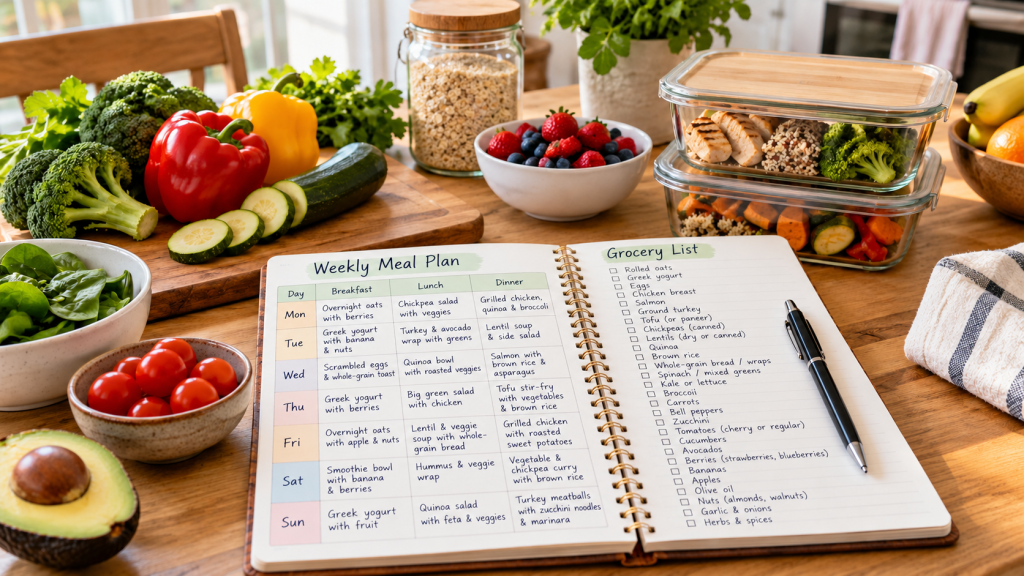
Planning meals for an entire week can sound like a lot of work, especially when you’re already juggling a busy schedule.
Maybe you’ve opened the refrigerator after a long day and wondered what to make for dinner. Or perhaps you’ve bought fresh vegetables with good intentions, only to find them forgotten at the back of the fridge a few days later.
If that sounds familiar, a little meal planning might make your week easier.
Healthy meal planning for beginners doesn’t have to involve complicated recipes, expensive ingredients, or spending your entire Sunday cooking.
It can be as simple as choosing a few meals you enjoy, checking what you already have at home, and writing a grocery list before heading to the store.
The goal isn’t to eat perfectly every day. It’s to make nutritious, satisfying meals more convenient while leaving room for your appetite, budget, preferences, and changing schedule.
You also don’t need to prepare seven completely different dinners. Using familiar ingredients in different ways can help reduce food waste and save preparation time.
In this guide, we’ll walk through the basics of healthy meal planning, share a flexible 7-day meal plan, and explore simple grocery shopping and food preparation tips.
Whether you’re cooking for yourself or planning meals for your family, you can adapt these ideas to fit your routine.
Start small, use what works for you, and remember that a good meal plan should make everyday life easier—not give you another list of rules to follow.
Table of Contents
What Is Healthy Meal Planning?
Healthy meal planning simply means thinking ahead about what you’d like to eat over the next few days.
It doesn’t have to involve a complicated spreadsheet, calorie-counting app, or a refrigerator filled with identical meal-prep containers.
For some people, planning means choosing breakfasts, lunches, and dinners for the entire week. For others, it’s deciding on three easy dinners and keeping a few ingredients ready for the remaining days.
Both approaches can work.
The purpose is to make everyday food decisions easier while helping you prepare meals that are satisfying, varied, and practical for your lifestyle.
What Makes a Meal Plan Healthy?
A useful meal plan includes a variety of foods that provide different nutrients.
You might build meals around:
- Vegetables and fruits: Fresh, frozen, and canned options can all fit into a balanced eating pattern.
- Whole grains: Foods such as oatmeal, brown rice, quinoa, and whole-wheat bread provide fiber and other nutrients.
- Protein foods: Eggs, beans, lentils, tofu, poultry, fish, and other protein sources help create satisfying meals.
- Dairy or fortified alternatives: Milk, yogurt, and suitable fortified plant-based alternatives can provide important nutrients.
- Unsaturated fats: Foods such as nuts, seeds, avocado, and olive oil can add flavor and variety.
You don’t need every food group on every plate. Balance can develop across your meals and snacks throughout the day.
For example, breakfast might be oatmeal with berries and yogurt, while lunch could be a rice bowl with beans, vegetables, and avocado.
Dinner might include roasted chicken or tofu, potatoes, and a side of vegetables.
These meals use familiar ingredients and don’t require complicated preparation.
Meal Planning Isn’t the Same as Meal Prepping
The terms are often used together, but they’re slightly different.
Meal planning is deciding what you intend to eat.
Meal prepping is preparing some or all of that food in advance.
You can plan meals without cooking everything ahead of time.
For example, you might decide on Monday’s dinner during the weekend but prepare it fresh on Monday evening.
Or you might cook a batch of rice, wash some vegetables, and prepare a sauce in advance so you can assemble meals more quickly later.
Choose whichever approach fits your schedule.
Why Meal Planning Can Be Helpful
A little planning can make everyday life more manageable.
It may help you:
- Spend less time deciding what to cook.
- Shop with a clearer grocery list.
- Make use of ingredients you already have.
- Reduce avoidable food waste.
- Include a wider variety of nutritious foods.
- Keep convenient meal options available during busy days.
Meal planning isn’t a guarantee that you’ll save money or eat differently every day. Its usefulness depends on how well the plan fits your household.
Beginner tip: Start by planning three dinners rather than every meal of the week. Once that feels comfortable, you can gradually plan more.
Healthy Meal Planning for Beginners: Where to Start
If you’ve never planned meals before, the idea of organizing seven days of food might feel overwhelming.
The easiest approach is usually to begin with meals you already know how to make.
You don’t need to completely change your grocery list or learn ten new recipes.
Here are six practical steps to get started.
Step 1: Check What You Already Have
Before writing your grocery list, take a quick look through your refrigerator, freezer, and pantry.
You might discover:
- A bag of frozen vegetables.
- A few eggs.
- Half a package of whole-wheat tortillas.
- Canned beans or tomatoes.
- Rice, pasta, or rolled oats.
- Fresh vegetables that need to be used soon.
These ingredients can become the starting point for your meals.
For example, canned beans, rice, and frozen vegetables could make a simple burrito bowl.
Using ingredients you already own can help you avoid unnecessary purchases.
Step 2: Choose Three or Four Familiar Meals
Instead of searching for entirely new recipes, write down a few meals you genuinely enjoy.
For example:
- Vegetable and egg breakfast sandwiches.
- Chicken or tofu rice bowls.
- Bean tacos with fresh vegetables.
- Whole-wheat pasta with tomato sauce and a side salad.
Once you’ve chosen a few meals, you can repeat them or use leftovers on another day.
There’s no need to cook something different every evening.
Step 3: Think About Your Weekly Schedule
Your meal plan should reflect your actual week.
If you work late on Tuesdays, that probably isn’t the best evening for a recipe requiring an hour of preparation.
You might choose a quick sandwich, a preplanned leftover meal, or something assembled from ingredients you’ve already prepared.
Save more time-consuming cooking for a day when your schedule is less demanding.
A realistic plan is more valuable than an ambitious one you won’t enjoy following.
Step 4: Write a Simple Grocery List
Once you’ve chosen your meals, write down the ingredients you need.
Organizing your list by grocery-store sections can make shopping easier.
For example:
- Produce: Bananas, apples, carrots, spinach, and bell peppers.
- Grains: Rolled oats, brown rice, and whole-grain bread.
- Protein: Eggs, canned beans, chicken, or tofu.
- Refrigerated items: Plain yogurt and milk or a suitable alternative.
- Pantry staples: Olive oil, canned tomatoes, and seasonings.
Check what you already have before adding something to the list.
You don’t have to buy every ingredient in its most expensive or freshest form. Frozen produce, canned beans, and store-brand staples can be convenient alternatives.
Step 5: Prepare Just a Few Things Ahead
Meal preparation doesn’t have to take up your entire weekend.
You might spend 20–30 minutes doing one or two helpful tasks, such as washing vegetables, portioning oats, or preparing ingredients for tomorrow’s lunch.
Cooked foods should be cooled and refrigerated promptly, using safe storage practices. Keep raw meat separate from ready-to-eat ingredients and cook foods to their appropriate safe temperatures.
You can also leave some preparation until the day you plan to eat.
The aim is to make cooking easier, not to create more work.
Step 6: Leave Room for Changes
A meal plan is a guide, not a strict schedule.
Maybe friends invite you to dinner. Perhaps you don’t feel like eating the meal you originally planned, or you unexpectedly arrive home late.
It’s okay to adjust.
You could swap Wednesday’s dinner with Friday’s, use a convenient freezer meal, or prepare something simple from your pantry.
Beginner tip: Keep one flexible evening in your weekly plan for leftovers, an easy meal, or unexpected schedule changes.
The best healthy meal plan is one you can adapt to real life, even when your week doesn’t go exactly as expected.
A Simple 7-Day Healthy Meal Plan for Beginners
Having a few meal ideas ready can make busy weekdays easier. Instead of deciding what to cook when you’re already tired or hungry, you’ll have a starting point.
The following seven-day meal plan uses familiar ingredients, straightforward recipes, and a mix of quick meals and make-ahead options.
It’s designed as a flexible example for adults, not a personalized diet or calorie-controlled weight-loss plan.
Your portions and food choices should reflect your appetite, activity level, dietary needs, and preferences. Feel free to swap meals, repeat favorites, or adjust ingredients.
Your 7-Day Meal Plan at a Glance
| Day | Breakfast | Lunch | Dinner |
|---|---|---|---|
| Monday | Overnight oats with berries and walnuts | Chicken or chickpea wrap with vegetables | Brown rice bowl with chicken or tofu and roasted vegetables |
| Tuesday | Scrambled eggs with whole-grain toast and fruit | Leftover rice bowl | Whole-wheat pasta with tomato sauce, vegetables, and white beans |
| Wednesday | Plain yogurt with banana, oats, and seeds | Tuna or mashed chickpea sandwich with cucumber | Bean and vegetable tacos with avocado |
| Thursday | Peanut butter and banana toast with milk or a fortified alternative | Leftover taco filling in a rice bowl | Baked salmon or tofu with sweet potato and broccoli |
| Friday | Vegetable egg scramble or tofu scramble | Hummus and vegetable wrap with fruit | Homemade pita pizza with vegetables and a side salad |
| Saturday | Warm oatmeal with apple and cinnamon | Black bean and corn salad with whole-grain crackers | Chicken or lentil vegetable soup with whole-grain bread |
| Sunday | Whole-grain pancakes with berries and yogurt | Egg or white bean salad sandwich | Sheet-pan chicken or chickpeas with potatoes and seasonal vegetables |
Remember: This is a collection of meal ideas, not a strict eating schedule. You can exchange meals between days or use convenient alternatives when plans change.
Monday: Start With Familiar Ingredients
Monday doesn’t need an elaborate menu.
Prepare overnight oats the night before, adding berries and walnuts in the morning.
For lunch, fill a whole-wheat tortilla with cooked chicken or chickpeas, lettuce, tomatoes, and a dressing you enjoy.
Dinner can be a simple rice bowl with roasted vegetables and chicken or tofu.
Make it easier: Prepare enough dinner ingredients for Tuesday’s lunch. Cool and refrigerate leftovers promptly.
Tuesday: Make Good Use of Leftovers
Start with scrambled eggs, whole-grain toast, and some fresh fruit.
For lunch, enjoy the rice bowl ingredients you saved from Monday. Reheat cooked leftovers thoroughly and keep any fresh toppings separate until serving.
Dinner is whole-wheat pasta with a simple tomato sauce, vegetables, and white beans.
Frozen spinach or broccoli can work well if you don’t have fresh vegetables available.
Make it easier: Keep canned beans and pasta in your pantry for meals that don’t require much preparation.
Wednesday: Keep Meals Colorful and Convenient
A bowl of plain yogurt topped with banana, oats, and chia seeds can make a quick breakfast.
For lunch, prepare a sandwich with canned tuna or mashed chickpeas and serve it with cucumber slices.
Dinner is a taco night using black beans, sautéed peppers, onions, avocado, and whole-wheat tortillas.
Make it easier: Cook extra taco filling and refrigerate it promptly for Thursday’s lunch.
Thursday: Choose Simple, Satisfying Meals
Whole-grain toast with peanut butter and sliced banana is an easy breakfast when you don’t feel like cooking.
For lunch, turn Wednesday’s leftover taco filling into a rice bowl with fresh vegetables.
Dinner can be baked salmon or tofu, roasted sweet potato, and steamed broccoli.
If seafood doesn’t fit your preferences or budget, tofu or another suitable protein option works well.
Make it easier: Cut vegetables ahead of time and keep them refrigerated until you’re ready to cook.
Friday: Make Room for a Fun Dinner
Start with a vegetable egg scramble or tofu scramble.
A hummus and vegetable wrap makes a convenient lunch, especially when paired with a piece of fruit.
For dinner, try homemade pita pizzas. Spread tomato sauce over whole-grain pita bread, add vegetables and your preferred cheese or alternative, then bake until heated through.
Serve with a simple side salad.
Make it easier: Use leftover vegetables as pizza toppings rather than buying something special.
Saturday: Keep Weekend Meals Flexible
Warm oatmeal with chopped apple and cinnamon is a comforting breakfast.
For lunch, combine black beans, corn, tomatoes, and bell peppers with a little olive oil and lime juice. Serve with whole-grain crackers.
Dinner can be chicken and vegetable soup or a lentil-based version, depending on your preferences.
Make it easier: If you prepare extra soup, refrigerate what you’ll eat within the next few days and freeze additional portions promptly.
Sunday: Prepare for the Coming Week
Enjoy whole-grain pancakes with berries and plain yogurt for breakfast.
For lunch, try an egg salad or mashed white bean sandwich with fresh vegetables.
Dinner can be a sheet-pan meal using chicken or chickpeas, potatoes, carrots, and other seasonal vegetables.
While dinner cooks, check your refrigerator and pantry for ingredients you can use next week.
Make it easier: Spend 10 minutes choosing a few meals for the days ahead. You don’t need to plan everything.
What About Snacks?
Snacks are optional. Whether you want one depends on your hunger, daily routine, and nutritional needs.
If you’d like something between meals, consider:
- An apple with peanut butter.
- Plain yogurt with berries.
- Whole-grain crackers with hummus.
- A banana and a small handful of nuts.
- Carrot sticks with a bean dip.
- Cheese or a suitable plant-based alternative with fruit.
- Whole-grain toast with avocado.
Choose foods you enjoy and portions that feel satisfying. There’s no need to eat snacks on a fixed schedule.
How to Adjust This Meal Plan to Your Needs
A healthy meal plan should work for you, not the other way around.
If you prefer vegetarian meals: Replace meat or fish with suitable options such as beans, lentils, tofu, tempeh, or eggs.
If you’re shopping on a budget: Choose store-brand oats, frozen vegetables, dried or canned beans, seasonal produce, and ingredients you can use in multiple meals.
If you’re cooking for a family: Prepare familiar base meals and let family members choose toppings or sides they enjoy.
If you have food allergies or dietary restrictions: Substitute ingredients carefully and check food labels. People with medical dietary requirements may benefit from personalized guidance from a registered dietitian.
If you have very little cooking time: Repeat easy meals, use frozen vegetables, and keep convenient protein and grain options available.
A balanced eating routine doesn’t require expensive foods or perfectly planned meals. What matters is finding an approach that gives you practical options throughout the week.
Food safety reminder: Refrigerate perishable foods promptly, generally within two hours, or within one hour in very hot conditions. Most cooked leftovers should be eaten within three to four days when properly refrigerated or frozen for later use. Reheat leftovers thoroughly. Follow appropriate safe cooking temperatures for meat, poultry, fish, and egg dishes.
Your Beginner-Friendly Grocery Shopping List
A meal plan is much easier to follow when you have the right ingredients available.
But you don’t need to fill your shopping cart with expensive health foods or buy everything on a long recipe list.
The best grocery list starts with what you already have at home.
Before heading to the store, check your refrigerator, freezer, and pantry. Then choose the ingredients you’ll actually use during the week.
Here’s a flexible shopping list based on the seven-day meal plan above.
Fresh Fruits and Vegetables
Choose a mixture of produce you enjoy and can realistically use.
- Bananas
- Apples
- Fresh or frozen berries
- Spinach or mixed salad greens
- Bell peppers
- Carrots
- Broccoli
- Tomatoes
- Cucumbers
- Onions
- Sweet potatoes
- Avocados
- Lemons or limes
Budget tip: You don’t have to buy every item. If berries are expensive, choose seasonal fruit or frozen alternatives. Frozen broccoli and spinach can also work well in cooked meals.
Whole Grains and Pantry Staples
These ingredients are useful because they can appear in several meals throughout the week.
- Rolled oats
- Brown rice
- Whole-grain bread
- Whole-wheat tortillas
- Whole-wheat pasta
- Whole-grain pita bread
- Whole-grain crackers
- Canned tomatoes or tomato sauce
- Olive oil
- Peanut butter
- Cinnamon and other preferred seasonings
Budget tip: Compare unit prices when shopping. Larger packages aren’t always the better deal, especially if you won’t use everything before it expires.
Protein Foods
Choose protein sources that fit your eating preferences and budget.
- Eggs
- Chicken or tofu
- Canned black beans
- Chickpeas
- White beans
- Lentils
- Canned tuna or salmon
- Nuts and seeds
You don’t need every protein option on this list.
For example, if you prefer vegetarian meals, beans, lentils, tofu, and eggs may cover several recipes.
Budget tip: Dried and canned beans are versatile options. If choosing canned varieties, compare sodium levels and rinse beans when appropriate.
Dairy and Fortified Alternatives
Depending on your preferences, you might choose:
- Plain yogurt or Greek yogurt
- Milk or an unsweetened fortified plant-based alternative
- Cheese or a suitable alternative
- Hummus
Check nutrition labels when comparing products, especially if you’re looking for particular nutrients such as protein or calcium.
How Much Should You Buy?
The quantities you need depend on how many people you’re feeding, how often you eat at home, and your appetite.
A household of four will need a different grocery list from someone preparing meals for one person.
Instead of copying a fixed shopping quantity, look through your chosen recipes and estimate what you’ll realistically use.
If you’re new to meal planning, consider shopping for three or four days at a time until you get a better sense of your household’s needs.
How to Meal Prep Without Spending Hours in the Kitchen
Meal preparation can save time later in the week, but it shouldn’t take over your entire day off.
For beginners, preparing a few useful ingredients is often easier than cooking every breakfast, lunch, and dinner ahead of time.
Try a Simple 30-Minute Preparation Session
If you have half an hour available, here is one way to use it.
First 10 minutes: Check and organize
- Review your meal plan.
- Check which ingredients need to be used first.
- Wash produce that you’ll prepare immediately.
- Gather the containers you’ll need for storing food.
Next 10 minutes: Prepare easy ingredients
- Portion rolled oats into containers for upcoming breakfasts.
- Slice vegetables for tomorrow’s meals.
- Rinse canned beans.
- Prepare a simple dressing or sauce.
Final 10 minutes: Make tomorrow easier
- Assemble overnight oats and refrigerate them.
- Pack shelf-stable ingredients for a lunch or snack.
- Organize refrigerated ingredients so they’re easy to find.
- Check whether anything needs to be thawed safely in the refrigerator for the next day.
You don’t have to finish every task in exactly 30 minutes. The schedule is simply a way to make preparation feel more manageable.
Choose Ingredients You Can Use More Than Once
One of the easiest ways to simplify meal planning is to choose ingredients that work in several meals.
For example:
Brown rice can be used in a chicken bowl, bean burrito bowl, or vegetable-based dinner.
Spinach works in scrambled eggs, pasta, salads, and wraps.
Black beans can become taco filling, a lunch salad, or part of a rice bowl.
Plain yogurt can be served with breakfast, blended into a smoothie, or used in certain sauces.
Using ingredients across multiple meals can make grocery shopping simpler and help reduce avoidable waste.
Know When to Refrigerate or Freeze Food
Food safety matters when you’re preparing meals ahead.
Refrigerate perishable ingredients and cooked foods promptly. Keep your refrigerator at 40°F (4°C) or below and your freezer at 0°F (-18°C) or below.
As a general guideline, many cooked leftovers can be refrigerated for three to four days. If you won’t eat them within that period, freezing them earlier may be a better choice.
Not all foods have the same recommended storage time. For more detailed guidance, check the official FoodSafety.gov Cold Food Storage Chart, which provides refrigerator and freezer storage recommendations for different foods.
Use clean, covered containers, keep raw meat separate from ready-to-eat foods, and follow safe cooking and reheating temperatures.
If a food has been stored improperly, don’t rely on its smell or appearance alone to decide whether it’s safe.
How to Reduce Food Waste While Meal Planning
Buying nutritious groceries is only helpful if you actually get to use them.
A few simple changes can help prevent forgotten ingredients and unnecessary food waste.
Use Perishable Ingredients First
Fresh berries, leafy greens, and certain vegetables may spoil sooner than frozen or shelf-stable foods.
Plan meals around these ingredients earlier in the week.
Later in the week, you can rely more on frozen vegetables, canned beans, or other foods that store well.
Give Leftovers a Second Purpose
Leftovers don’t have to mean eating exactly the same meal again.
You might turn:
- Roasted vegetables into a wrap or grain bowl.
- Cooked chicken into a sandwich or soup.
- Taco filling into a rice bowl.
- Extra beans into a quick salad.
- Leftover cooked grains into a different meal with freshly prepared toppings.
Store leftovers safely and use or freeze them within recommended storage periods.
Keep One Flexible Meal in Your Plan
Some weeks won’t go exactly as expected.
You might work late, have guests over, or simply want something different for dinner.
Leaving one flexible meal in your schedule gives you space to use leftovers, prepare a quick pantry meal, or change your plans without wasting food.
Buy What You Will Actually Eat
A grocery list full of foods you don’t enjoy won’t make healthy eating easier.
Choose ingredients that fit your tastes, household preferences, and budget.
If you dislike kale, you don’t need to buy it just because it’s popular in healthy recipes.
There are plenty of other vegetables to choose from.
Beginner tip: At the end of each week, write down which ingredients you used and which ones went to waste. Use that information to make next week’s grocery list more practical.
Make Your Meal Plan Work for Your Budget
Eating balanced meals doesn’t have to involve specialty products or expensive ingredients.
Affordable staples such as oats, beans, lentils, eggs, whole grains, and frozen vegetables can form the foundation of many satisfying meals.
Try these simple strategies:
- Choose store brands when practical. Compare ingredients and unit prices rather than relying on packaging.
- Use frozen and canned produce. These can be convenient alternatives to fresh options.
- Repeat ingredients across meals. You may spend less when you don’t need separate ingredients for every recipe.
- Plan around sales when useful. Buy discounted perishables only if you can use or safely freeze them.
- Keep a few backup meals available. Pasta, canned beans, and frozen vegetables can help when plans change.
Saving money isn’t about buying the cheapest food in every situation.
It’s about choosing meals you enjoy, shopping thoughtfully, and making the most of the ingredients available to you.
Remember: A successful meal plan isn’t the one that looks most impressive online. It’s the one that helps you prepare satisfying meals while fitting your real-life schedule and budget.
Frequently Asked Questions About Healthy Meal Planning
1. How do I start healthy meal planning as a beginner?
Start small. Choose two or three meals you already enjoy, check which ingredients you have at home, and make a grocery list for anything missing.
You don’t need to plan every meal immediately. Beginning with a few dinners or preparing tomorrow’s lunch can help you discover what works for your routine.
As you become more comfortable, gradually plan more meals if you find it helpful.
2. Do I need to cook all seven days of meals in advance?
No. Meal planning and meal prepping are different.
You can decide what to eat throughout the week without preparing everything ahead of time.
For example, you might cook a fresh dinner on Monday, use properly stored leftovers for Tuesday’s lunch, and prepare overnight oats for Wednesday morning.
If you prefer batch cooking, remember to refrigerate or freeze prepared food promptly and follow safe storage guidelines.
3. Is healthy meal planning expensive?
Not necessarily.
Affordable foods such as rolled oats, beans, lentils, eggs, brown rice, frozen vegetables, and seasonal fruit can be useful ingredients for balanced meals.
Planning around foods you already have and choosing ingredients that work in multiple recipes may also help reduce unnecessary spending.
Your grocery costs will depend on your household size, location, food preferences, and shopping habits.
4. What should I eat if I don’t have time to cook?
You can still put together satisfying meals with minimal preparation.
Some convenient options include:
- Whole-grain toast with eggs or peanut butter and fruit.
- A hummus and vegetable wrap.
- Plain yogurt with oats, berries, and nuts.
- A rice bowl using canned beans and frozen vegetables.
- A sandwich with protein and vegetables.
Convenience doesn’t automatically mean a meal is unhealthy. The goal is to choose options that fit your needs and make eating well more practical.
5. Can I follow this meal plan if I want to manage my weight?
The seven-day plan provides general meal ideas rather than a personalized weight-management diet.
People have different nutritional needs, and body weight is influenced by many factors beyond meal choices.
For a sustainable approach, focus on balanced, satisfying meals, enjoyable movement, sleep, and realistic routines.
You can also read our Healthy Weight Management: 10 Sustainable Habits That Actually Fit Real Life article for more everyday wellness ideas.
If you need individualized guidance, consider speaking with a registered dietitian or qualified healthcare professional.
6. How often should I change my weekly meal plan?
There’s no fixed rule.
Some people enjoy repeating the same meals each week because it makes shopping easier. Others prefer changing their menu regularly.
You might keep a few favorites and introduce one new meal each week.
A meal plan should offer enough variety to meet your nutritional needs while remaining manageable for your schedule and budget.
Final Thoughts: Keep Healthy Meal Planning Simple
Healthy meal planning doesn’t need to be complicated.
You don’t have to prepare every meal from scratch, buy expensive ingredients, or follow a perfectly organized schedule.
Sometimes, having a few familiar recipes, a short grocery list, and ingredients ready for tomorrow is enough to make the week feel easier.
If you’re just getting started, choose three meals you’d genuinely enjoy eating.
Check what you already have, pick up the missing ingredients, and see how your plan works over the next few days.
You might discover that preparing breakfast the night before saves time. Perhaps keeping frozen vegetables available makes dinner easier. Or maybe planning just a few meals gives you the flexibility you need.
There’s no single method that works for everyone.
The best approach is one that helps you eat satisfying, varied meals while fitting your daily responsibilities, preferences, and budget.
Start with what feels manageable and adjust as you learn what works for you.
Explore More Healthy Living Ideas
Looking for more practical ways to build a balanced routine? Explore these related Nourish & Trim Hub articles:
- 10 Easy Healthy Breakfast Ideas for Busy Mornings — Quick breakfasts, make-ahead options, and convenient meals for busy schedules.
- 7 Simple Healthy Habits You Can Start Today — Everyday ideas for hydration, movement, eating habits, and sleep.
- Healthy Weight Management: 10 Sustainable Habits That Actually Fit Real Life — A realistic approach to balanced eating and long-term well-being.
You can also download our Free 7-Day Healthy Habits Starter Guide for simple daily inspiration covering nutrition, movement, hydration, and everyday wellness.
Get your free 7-day guide delivered to your inbox.
Healthy routines don’t have to start with big changes. Sometimes, the most useful first step is simply deciding what to make for dinner tomorrow.