
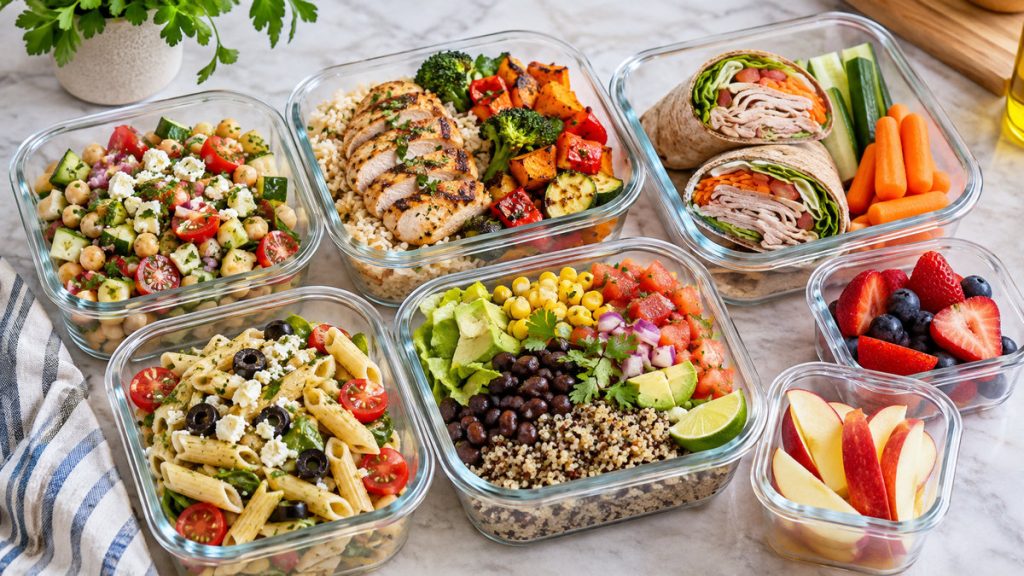
Packing lunch for work sounds simple until a busy week gets in the way. Between morning routines, meetings, commuting, and everything waiting at home, deciding what to eat at lunchtime can quickly become another daily chore.
Buying lunch is convenient, but doing it regularly can get expensive. On the other hand, preparing the same sandwich every day isn’t always appealing.
The good news is that healthy lunch ideas for work don’t have to involve complicated recipes, expensive ingredients, or spending hours in the kitchen.
A few familiar foods, such as rice, chicken, beans, eggs, whole-grain wraps, and fresh vegetables, can be combined into lunches that are easy to prepare, pack, and enjoy.
Some of the ideas below can be eaten cold, while others work better with access to a microwave. You’ll also find vegetarian choices, simple ingredient swaps, and meal-preparation tips for different schedules.
Whether you work in an office, travel between locations, or prefer bringing lunch from home, these 12 practical ideas can help make your workweek a little easier.
Table of Contents
Why Preparing Lunch for Work Can Be Helpful
Bringing lunch from home can make the middle of your workday more predictable.
Instead of deciding what to buy when you’re already hungry, you have something ready when your break begins.
Preparing lunch ahead of time can also help you:
- Manage food spending: Buying ingredients for several meals may cost less than purchasing individual restaurant lunches.
- Use ingredients you already have: Leftover cooked vegetables, beans, grains, and proteins can become another meal.
- Include more variety: You can combine vegetables, protein-rich foods, and whole grains in ways you enjoy.
- Save time during the workday: A packed lunch can be especially convenient when your break is short.
- Reduce unnecessary food waste: Planning meals around ingredients you already own can help you use them before they spoil.
That doesn’t mean every lunch needs to be homemade.
Some days, a store-bought meal or a simple sandwich is the most practical choice. The goal is to have a few dependable options that make everyday eating easier.
What Makes a Balanced Work Lunch?
There’s no single formula that makes every lunch healthy for everyone.
Nutritional needs vary depending on age, activity, appetite, health conditions, and personal preferences.
Still, a useful starting point is to include a combination of these foods:
1. Vegetables or fruit
Try leafy greens, carrots, cucumbers, tomatoes, broccoli, berries, or seasonal produce.
Fresh, frozen, and appropriately prepared canned options can all be useful.
2. Protein-rich foods
Chicken, eggs, beans, lentils, tofu, fish, yogurt, and other protein sources can help make a lunch more substantial.
3. Whole grains or other satisfying carbohydrates
Brown rice, whole-wheat tortillas, oats, quinoa, potatoes, and whole-grain bread are practical choices.
4. Flavor and healthy fats
Olive oil, avocado, nuts, seeds, herbs, spices, and flavorful dressings can make simple ingredients more enjoyable.
The Centers for Disease Control and Prevention’s healthy eating guidance emphasizes a variety of nutrient-dense foods, including vegetables, fruits, protein sources, healthy fats, and whole grains.
You don’t have to include every food group in one container. Consider what you eat across the day and choose portions that suit your needs.
For a more detailed approach to organizing meals throughout the week, explore our Healthy Meal Planning for Beginners: A Simple 7-Day Guide.
12 Easy Healthy Lunch Ideas for Work
These lunches use ingredients commonly available in US grocery stores.
You can adjust the amounts according to your appetite and the number of people you’re preparing food for. Each idea is a flexible meal combination rather than a fixed-calorie diet recipe.
1. Chicken, Brown Rice, and Roasted Vegetable Bowl
A chicken and rice bowl is a dependable lunch when you want something warm and filling.
It also works well for meal preparation because you can cook the main ingredients together and portion them into individual containers.
Ingredients:
- ¾ cup cooked brown rice
- 3–4 ounces cooked, boneless chicken
- 1 cup roasted broccoli, carrots, or bell peppers
- 1 teaspoon olive oil
- Garlic powder, black pepper, or your preferred seasoning
- Optional lemon juice
How to prepare:
- Cook the brown rice according to the package instructions.
- Season the chicken and cook it thoroughly to a safe internal temperature of 165°F.
- Chop the vegetables, add a little olive oil, and roast until tender.
- Divide the rice, chicken, and vegetables into meal-prep containers.
- Refrigerate promptly and add lemon juice or other seasoning when serving.
Budget-friendly tip: Frozen broccoli or mixed vegetables can be a practical alternative to fresh produce, especially when you don’t expect to use a large quantity.
Easy variation: Replace chicken with cooked tofu or chickpeas for a meatless bowl.
Workday tip: Keep refrigerated until lunchtime and reheat safely if you prefer it warm.
2. Chickpea, Cucumber, and Feta Salad
If you prefer lunches that don’t need reheating, this chickpea salad is a useful option.
Chickpeas provide plant-based protein and fiber, while cucumber, tomatoes, and lemon bring fresh flavor.
Ingredients:
- ¾ cup drained and rinsed canned chickpeas
- ½ cup diced cucumber
- A handful of cherry tomatoes
- 2 tablespoons crumbled feta cheese
- 1 teaspoon olive oil
- Lemon juice
- Dried oregano or black pepper
How to prepare:
- Rinse and drain the chickpeas.
- Chop the cucumber and tomatoes.
- Combine the chickpeas, vegetables, and feta in a container.
- Mix the olive oil, lemon juice, and seasoning separately.
- Add the dressing when you’re ready to eat.
Budget-friendly tip: Canned chickpeas are convenient, while dried chickpeas may be more economical if you cook them regularly.
Easy variation: Replace feta with diced avocado or omit the cheese for a dairy-free version.
Workday tip: This salad can be eaten cold, but it still needs appropriate refrigeration or an insulated lunch bag with adequate cold sources.
3. Turkey and Hummus Crunch Wrap
A wrap is easy to hold, pack, and eat during a short lunch break.
This version uses deli turkey, hummus, and crunchy vegetables. It can be prepared in the morning or assembled ahead with the wetter ingredients packed separately.
Ingredients:
- 1 whole-wheat tortilla
- 2–3 ounces ready-to-eat deli turkey
- 2 tablespoons hummus
- A few lettuce leaves
- Sliced cucumber or bell pepper
- Optional shredded carrots
How to prepare:
- Spread hummus across the tortilla.
- Add the turkey and vegetables.
- Fold in the sides and roll the tortilla tightly.
- Wrap it in food-safe packaging or place it in a container.
- Refrigerate until you’re ready to pack lunch.
Budget-friendly tip: Compare the unit price of deli turkey with home-cooked turkey or chicken. Using leftover safely cooked poultry can sometimes cost less.
Easy variation: Substitute roasted chickpeas or cooked tofu for turkey.
Workday tip: Pack it cold and eat it without reheating. Keep the hummus and turkey chilled.
4. Black Bean and Roasted Sweet Potato Burrito Bowl
This colorful lunch combines beans, sweet potatoes, rice, and vegetables in one container.
It’s useful for vegetarian meal preparation because many of its ingredients are inexpensive pantry or freezer staples.
Ingredients:
- ½ cup cooked brown rice
- ½–¾ cup black beans, drained and rinsed
- ½ medium roasted sweet potato
- A few tablespoons of corn
- Diced bell pepper
- Salsa
- Optional avocado, lime juice, or cilantro
How to prepare:
- Peel and dice the sweet potato.
- Roast it with a little oil and seasoning until tender.
- Cook the rice and prepare the black beans according to the package directions.
- Assemble the rice, beans, sweet potato, corn, and peppers in a container.
- Pack salsa and avocado separately.
Budget-friendly tip: Frozen corn and canned black beans are convenient ingredients that can be used in several different meals.
Easy variation: Use regular potatoes instead of sweet potatoes, or add cooked chicken if you prefer.
Workday tip: Eat it cold if you enjoy that texture, or reheat it thoroughly. Keep avocado separate until serving.
5. Lemon Tuna and White Bean Salad
A tuna and bean salad is practical when you need lunch without much cooking.
Shelf-stable tuna pouches or cans can be kept in your pantry until you’re ready to use them.
Ingredients:
- 1 single-serving pouch of canned light tuna in water
- ½ cup drained and rinsed white beans
- Chopped cucumber
- Diced celery
- Lemon juice
- 1 teaspoon olive oil
- Black pepper or dried parsley
- Optional whole-grain crackers
How to prepare:
- Drain and rinse the white beans.
- Chop the cucumber and celery.
- Combine the beans and vegetables in a chilled container.
- Pack the unopened tuna pouch separately.
- At lunchtime, open the tuna and mix it with the salad, olive oil, lemon juice, and seasoning.
Budget-friendly tip: Compare canned tuna with single-serving pouches. A can may offer better value when preparing several portions.
Easy variation: Replace the tuna with cooked chickpeas or canned salmon, depending on your preferences.
Workday tip: An unopened shelf-stable tuna pouch can remain at room temperature according to its packaging instructions, but the prepared bean-and-vegetable salad must be kept cold. Refrigerate any leftovers promptly.
People who are pregnant, breastfeeding, or preparing meals for young children should follow current FDA advice on choosing fish with lower mercury levels.
6. Peanut-Lime Tofu Noodle Bowl
This lunch is especially useful when you want something different from rice bowls and sandwiches.
Whole-wheat noodles, vegetables, and tofu provide a combination of textures, and the peanut-lime dressing adds plenty of flavor.
Ingredients:
- 1 cup cooked whole-wheat noodles
- 3–4 ounces cooked firm tofu
- Shredded cabbage or carrots
- Sliced bell peppers
- 1 tablespoon peanut butter
- Lime juice
- A little water
- Optional reduced-sodium soy sauce
How to prepare:
- Cook the noodles according to the package instructions.
- Drain them and cool promptly.
- Cut the tofu into cubes and cook until lightly browned.
- Mix peanut butter, lime juice, a little water, and optional soy sauce into a dressing.
- Combine the noodles, tofu, and vegetables.
- Pack the dressing separately and toss together before eating.
Budget-friendly tip: A block of tofu and a bag of whole-wheat noodles can provide several meals. Cabbage is also useful in multiple recipes.
Easy variation: Replace tofu with cooked chicken or edamame. For peanut allergies, choose a suitable seed-based dressing and check ingredient labels.
Workday tip: Keep the prepared bowl refrigerated or properly chilled. It can be eaten cold.
7. Mediterranean Quinoa and Roasted Vegetable Bowl
Quinoa works well with roasted vegetables, chickpeas, and a light lemon dressing.
This is a good choice when you’d like a lunch that can be eaten cold but feels more substantial than a small salad.
Ingredients:
- ¾ cup cooked quinoa
- ½ cup chickpeas
- Roasted zucchini or bell peppers
- A handful of spinach
- 1 teaspoon olive oil
- Lemon juice
- Dried oregano
- Optional feta cheese
How to prepare:
- Cook the quinoa according to the package directions.
- Roast the vegetables until tender.
- Cool the ingredients promptly.
- Combine quinoa, vegetables, chickpeas, and spinach.
- Pack the lemon dressing separately and add it before eating.
Budget-friendly tip: Quinoa can be more expensive than rice or other grains. If necessary, substitute brown rice, barley, or another grain you already have.
Easy variation: Add cooked chicken, tofu, or another preferred protein.
Workday tip: This bowl is convenient for lunches without a microwave, provided it remains chilled until eaten.
8. Egg, Spinach, and Vegetable Pita Pockets
Hard-boiled eggs are useful for simple lunches that don’t require much cooking on busy mornings.
Pairing them with vegetables and whole-wheat pita creates an easy lunch you can assemble quickly.
Ingredients:
- 2 hard-boiled eggs
- 1 whole-wheat pita
- A handful of spinach
- Chopped cucumber
- 1 tablespoon plain Greek yogurt
- Dried dill or black pepper
How to prepare:
- Cook the eggs until the yolks and whites are firm.
- Cool them promptly and refrigerate.
- Chop the eggs into small pieces.
- Mix the Greek yogurt with dill or pepper.
- Combine the eggs with the yogurt mixture.
- Fill the pita with spinach, cucumber, and the egg mixture.
Budget-friendly tip: Eggs are versatile ingredients that can also be used for breakfast, snacks, and other meals throughout the week.
Easy variation: Replace the yogurt with mashed avocado or another dressing you enjoy.
Workday tip: Keep the egg filling chilled. Packing the pita separately can prevent it from becoming soggy.
9. Chicken Pesto Pasta Salad
A cold pasta salad is useful when you enjoy familiar ingredients but want something more interesting than plain leftovers.
Using cooked chicken and a small amount of pesto creates a flavorful combination without requiring a complicated sauce.
Ingredients:
- 1 cup cooked whole-wheat pasta
- 3 ounces cooked chicken
- Cherry tomatoes
- A handful of spinach
- 1–2 tablespoons prepared pesto
- Optional lemon juice
How to prepare:
- Cook the pasta according to the package directions.
- Drain and cool it promptly.
- Cut safely cooked chicken into small pieces.
- Combine the pasta, chicken, spinach, and tomatoes.
- Add pesto and stir gently.
- Transfer to a sealed container and refrigerate.
Budget-friendly tip: Prepare a little extra chicken while cooking dinner and reserve a portion for lunch, following safe cooling and storage practices.
Easy variation: Replace chicken with chickpeas or white beans.
Workday tip: This pasta salad is intended to be eaten cold. Keep it refrigerated because it contains perishable ingredients.
10. Lentil and Vegetable Soup
A warm bowl of soup can be particularly appealing during colder months or on days when you want something comforting.
Lentils are a useful ingredient because they’re affordable, versatile, and contain protein and fiber.
Ingredients:
- ½ cup dried lentils
- 1 chopped carrot
- 1 small celery stalk
- ¼ onion
- ½ cup canned diced tomatoes
- Vegetable broth or water
- Garlic powder, thyme, or black pepper
- A little olive oil
How to prepare:
- Rinse and sort the lentils according to the package instructions.
- Chop the vegetables.
- Heat a little olive oil in a saucepan and soften the onion, carrot, and celery.
- Add lentils, tomatoes, broth, and seasoning.
- Simmer until the lentils are tender, adding liquid as needed.
- Divide into portions, cool promptly in shallow containers, and refrigerate or freeze.
Budget-friendly tip: Dried lentils often provide good value and can be used in salads, soups, and grain bowls.
Easy variation: Add spinach near the end of cooking or include a portion of cooked chicken if desired.
Workday tip: Reheat chilled soup thoroughly, or transfer safely heated soup to a preheated insulated food container that maintains a safe hot temperature. Follow the container manufacturer’s instructions.
11. Hummus, Roasted Pepper, and Spinach Sandwich
A vegetarian sandwich can be quick, colorful, and satisfying without needing elaborate preparation.
This version uses hummus, vegetables, and whole-grain bread.
Ingredients:
- 2 slices whole-grain bread
- 3 tablespoons hummus
- A handful of spinach
- Sliced cucumber
- Roasted red peppers
- Optional cooked edamame on the side
How to prepare:
- Spread hummus on the bread.
- Add spinach, cucumber, and roasted peppers.
- Close the sandwich and cut it in half.
- Pack it in a sandwich container.
- Include a chilled portion of cooked edamame if you’d like an additional protein source.
Budget-friendly tip: Store-brand hummus and whole-grain bread may cost less than ready-made vegetarian sandwiches.
Easy variation: Replace hummus with mashed white beans and lemon juice.
Workday tip: Keep the sandwich appropriately chilled, especially with perishable fillings. Pack cucumber separately if you want the bread to stay firmer.
12. Black Bean and Vegetable Quesadilla
A quesadilla is a flexible lunch because you can change the filling based on what’s available.
This version uses black beans, vegetables, and cheese.
Ingredients:
- 1 whole-wheat tortilla
- ½ cup cooked black beans
- Shredded cheese
- Chopped spinach
- Diced bell pepper
- Optional salsa
How to prepare:
- Place the tortilla on a clean surface.
- Spread the black beans over half the tortilla.
- Add spinach, bell pepper, and a modest amount of cheese.
- Fold the tortilla in half.
- Cook in a skillet until the filling is heated through and the tortilla is lightly browned.
- Cool promptly, refrigerate, and pack salsa separately.
Budget-friendly tip: This is a useful way to use small portions of beans and vegetables left from other meals.
Easy variation: Add cooked chicken or replace the cheese with a suitable dairy-free alternative.
Workday tip: Reheat thoroughly if serving warm, or enjoy chilled if you prefer, provided it has been stored safely.
Best Work Lunches That Don’t Need a Microwave
Not every workplace has access to a microwave.
Even when one is available, you might prefer not to spend your lunch break waiting in line to heat food.
Several of the meals above can be eaten cold:
- Chickpea, cucumber, and feta salad
- Turkey and hummus crunch wrap
- Lemon tuna and white bean salad
- Peanut-lime tofu noodle bowl
- Mediterranean quinoa and roasted vegetable bowl
- Egg and vegetable pita pockets
- Chicken pesto pasta salad
- Hummus and vegetable sandwich
The important distinction is that not needing a microwave doesn’t mean not needing refrigeration.
Most of these lunches contain cooked grains, beans, dairy, meat, eggs, tofu, or chopped produce that should be kept cold.
Use a refrigerator or a properly packed insulated lunch bag with adequate ice packs.
If you work somewhere without access to either, consider genuinely shelf-stable products kept unopened until lunchtime, such as suitable canned foods, whole fruit, and unopened shelf-stable packages. Always follow the storage instructions on the label.
How to Meal Prep Work Lunches Without Spending All Sunday Cooking
Meal preparation doesn’t have to mean cooking five complete lunches at once.
For many people, a flexible routine is easier to maintain.
1. Choose Two Main Lunch Recipes
Instead of planning five unrelated lunches, choose two meal combinations you enjoy.
For example, prepare a batch of chicken and rice bowls alongside ingredients for chickpea salad.
This gives you variety without buying a long list of groceries.
2. Prepare Ingredients That Work in Multiple Meals
Some ingredients can be reused throughout the week:
- Brown rice for chicken bowls and burrito bowls
- Chickpeas for salads and quinoa bowls
- Spinach for sandwiches, wraps, and pasta salads
- Cooked chicken for bowls, wraps, and pasta
- Bell peppers for quesadillas, salads, and noodle bowls
Using overlapping ingredients can reduce preparation time and help limit food waste.
3. Split Meal Preparation Into Two Sessions
You don’t have to prepare every lunch on Sunday.
A practical approach is to prepare a few portions for the start of the week, then make another small batch around Wednesday.
This also makes it easier to manage the safe storage life of cooked food.
USDA guidance generally recommends using properly refrigerated cooked leftovers within 3–4 days, or freezing portions intended for later use.
4. Keep Sauces and Crunchy Ingredients Separate
A small amount of planning can improve the texture of packed lunches.
Keep salad dressing separate from leafy greens, sauces away from bread, and crunchy toppings in their own containers.
Combine the ingredients shortly before eating.
5. Keep One Backup Lunch Available
Some weeks don’t go as planned.
Having suitable shelf-stable ingredients in your pantry, or a labeled frozen meal that can be transported and reheated safely, can make lunch preparation easier when time is limited.
How to Keep Work Lunches Affordable
You don’t need premium meal-prep containers or specialty grocery products to prepare balanced lunches.
Start with familiar ingredients and make small adjustments based on local prices.
Buy Ingredients You Can Use in Several Meals
Buying a full bag of spinach or several bell peppers makes more sense when you already know how you’ll use them.
Try planning meals around overlapping ingredients rather than buying completely different items for every recipe.
Use Frozen and Canned Vegetables
Frozen broccoli, spinach, peas, and mixed vegetables can be convenient alternatives to fresh produce.
Canned beans, tomatoes, and vegetables can also help simplify preparation.
Look at sodium levels when selecting packaged products. Draining and rinsing canned beans may help reduce some of the sodium.
Compare Unit Prices
Larger packages sometimes cost less per serving, but only if you’ll use the food before it spoils.
Compare the price per ounce or pound and consider your household’s actual needs.
Choose Affordable Protein Sources
Eggs, beans, lentils, canned fish, and tofu can be practical alternatives to more expensive prepared foods.
Prices vary by location, so check local grocery options rather than assuming one ingredient is always cheapest.
Make Sensible Substitutions
You can keep a recipe useful without buying every ingredient listed.
For example:
- Replace quinoa with brown rice.
- Replace fresh broccoli with frozen broccoli.
- Use canned chickpeas instead of preparing dried beans.
- Substitute a seasonal vegetable for an expensive out-of-season one.
- Use leftovers from dinner when they’ve been handled and stored safely.
Small substitutions are often more useful than complicated cost-saving strategies.
A Simple Five-Day Healthy Work Lunch Plan
Here’s an example of how to organize lunches across a typical Monday-to-Friday workweek.
| Day | Lunch | Preparation idea |
|---|---|---|
| Monday | Chicken, brown rice, and roasted vegetable bowl | Prepare and chill on Sunday |
| Tuesday | Chickpea, cucumber, and feta salad | Chop vegetables and pack dressing separately |
| Wednesday | Turkey and hummus crunch wrap | Assemble shortly before work |
| Thursday | Black bean and sweet potato burrito bowl | Prepare midweek or use safely frozen portions |
| Friday | Chicken pesto pasta salad | Use freshly prepared ingredients or a safely stored midweek batch |
This is a flexible sample plan, not a required eating schedule.
Adjust the combinations based on dietary preferences, available ingredients, and your appetite.
Simple Grocery List for the Week
Protein-rich foods:
- Chicken
- Canned chickpeas
- Black beans
- Deli turkey
- Feta cheese
Grains and other carbohydrates:
- Brown rice
- Whole-wheat tortillas
- Whole-wheat pasta
- Sweet potatoes
Vegetables and fruit:
- Broccoli
- Carrots
- Cucumbers
- Cherry tomatoes
- Bell peppers
- Spinach
- Lemons or limes
Pantry and flavor ingredients:
- Olive oil
- Hummus
- Pesto
- Salsa
- Garlic powder
- Dried herbs
- Black pepper
Check your kitchen before shopping. You may already have several items on this list.
Get Your Free 7-Day Healthy Habits Starter Guide
Building a healthier daily routine doesn’t have to begin with a complicated meal plan.
If you’d like more practical ideas for balanced eating, movement, hydration, and everyday wellness, explore our free 7-Day Healthy Habits Starter Guide.
The guide offers simple daily suggestions that you can adapt to your lifestyle.
Get My Free 7-Day Healthy Habits Starter Guide
Sign up through our homepage form, and we’ll send the guide to your email inbox.
How to Pack and Store Work Lunches Safely
Meal preparation saves time only when the food is stored and transported safely.
A lunch that has been sitting in a warm car or on a desk for several hours may no longer be safe to eat.
Keep Perishable Foods Cold
The USDA’s packed-lunch guidance recommends using at least two cold sources in an insulated lunch bag when transporting perishable foods.
You can use frozen gel packs or an appropriate combination of cold sources.
Keep perishable food at 40°F or below.
If a refrigerator is available at work, place your lunch inside as soon as practical.
Follow the Two-Hour Rule
Perishable foods should generally not remain unrefrigerated for more than two hours.
When temperatures exceed 90°F, such as inside a hot vehicle, that limit is reduced to one hour.
This applies to foods such as chicken, eggs, dairy products, cooked rice, and many prepared lunches.
Store Leftovers Properly
According to the USDA’s leftover food safety guidance, properly refrigerated cooked leftovers should generally be used within three to four days.
Divide large quantities into shallow containers and refrigerate promptly so they cool more quickly.
Freeze portions you won’t eat within the recommended storage period.
Labeling containers with the preparation date can help you avoid guessing how long something has been stored.
Reheat Leftovers Thoroughly
When reheating cooked leftovers, they should reach an internal temperature of 165°F, measured with a food thermometer.
Microwaves can heat unevenly. Stir or rotate food as appropriate and follow recommended standing times.
Use microwave-safe containers.
Don’t Rely Only on Smell or Appearance
Food can contain harmful bacteria even when it smells normal.
If a perishable lunch has been stored at an unsafe temperature for too long, discard it rather than taking a chance.
Also remember that certain lunches contain common allergens such as wheat, milk, eggs, fish, soy, peanuts, or sesame. Check ingredient labels and workplace food policies when preparing meals.
Frequently Asked Questions
What are the easiest healthy lunches to bring to work?
Some convenient choices include chickpea salads, whole-grain wraps, chicken and rice bowls, cold pasta salads, and hummus sandwiches.
Choose meals that fit your available preparation time and workplace facilities.
What are some budget-friendly lunch ideas for work?
Beans, lentils, eggs, brown rice, frozen vegetables, and whole-grain tortillas can help form the basis of affordable lunches.
Using the same ingredients in multiple recipes can also reduce waste and simplify grocery shopping.
Can I prepare all five work lunches on Sunday?
You can prepare ingredients ahead, but not every refrigerated meal should be kept until Friday.
Most cooked leftovers should be used within three to four days when properly refrigerated.
Prepare another batch midweek or freeze portions intended for later in the week.
What lunches can I take to work without a microwave?
Cold chickpea salads, hummus wraps, quinoa bowls, chilled pasta salads, and egg pita pockets are possible options.
These meals generally still require refrigeration or adequate cold packing.
Are sandwiches a healthy lunch option?
They can be part of a balanced eating pattern.
Whole-grain bread, vegetables, and a suitable protein source can make a practical lunch.
Consider the type and amount of fillings, sauces, and accompanying foods rather than assuming all sandwiches are nutritionally the same.
Do I need to count calories to prepare healthier work lunches?
Not necessarily.
Some people track calories for specific goals, but many can benefit from choosing a variety of nutritious foods and paying attention to hunger, satisfaction, and portions.
Individual nutrition needs vary. Anyone managing a medical condition or following a prescribed eating plan should use appropriate professional guidance.
How can I make lunch more satisfying?
Consider including a protein-rich food, vegetables, and a source of carbohydrates or fiber, along with flavors you enjoy.
A lunch that suits your appetite and daily schedule is more useful than one based solely on a nutrition label or a strict meal-prep trend.
What if I don’t have time to meal prep every week?
Start with one or two simple lunches.
A whole-grain wrap with hummus and vegetables, a bean salad, or a suitably stored leftover meal can be easier than following an elaborate preparation routine.
Consistency doesn’t require doing everything perfectly.
Final Thoughts: Make Your Lunch Routine Work for You
Preparing lunch for work doesn’t have to become another demanding task.
A few dependable ingredients, basic preparation habits, and a willingness to repeat meals you genuinely enjoy can make weekday lunches easier.
You might start with a chicken and rice bowl one day, a colorful chickpea salad the next, and a simple wrap later in the week.
There isn’t one lunch plan that works for everyone. Your preferences, food budget, schedule, and available storage facilities all matter.
If you’re looking for more ways to make everyday eating manageable, our 7 Simple Healthy Habits You Can Start Today offers additional ideas for building a balanced routine.
Start with one or two lunches that appeal to you, see how they fit into your week, and adjust from there.
The most practical lunch routine is one you can comfortably maintain.
More Healthy Living Ideas From Nourish & Trim Hub
Looking for more ways to plan meals and snacks throughout your week? These articles may help.
- 10 Easy Healthy Breakfast Ideas for Busy Mornings — Practical breakfast ideas, including make-ahead and no-cook options for busy schedules.
- 15 Healthy Snacks for Busy Days: Easy, Budget-Friendly Ideas — Convenient snack combinations using familiar, affordable ingredients.
- 15 High-Protein Snacks for Work: Easy, Budget-Friendly Ideas — Protein-rich snack ideas with preparation and food-storage tips.
- Healthy Weight Management: 10 Sustainable Habits That Actually Fit Real Life — A balanced look at everyday eating, movement, sleep, and sustainable routines.
Sources and Further Reading
For additional information about balanced eating and safe food preparation, explore these resources:
- Centers for Disease Control and Prevention — Healthy Eating Tips
- USDA Food Safety and Inspection Service — How Do You Keep a Bag Lunch Safe?
- USDA Food Safety and Inspection Service — How Do I Handle Leftovers Safely?
- FoodSafety.gov — Safe Minimum Internal Temperatures
- CDC — Preventing Food Poisoning
Health and nutrition note: This article provides general information about food choices and meal preparation. It isn’t individualized medical or dietary advice. People with food allergies, diabetes, kidney conditions, pregnancy-related dietary requirements, or other specific health needs should follow guidance from a qualified healthcare professional or registered dietitian.