
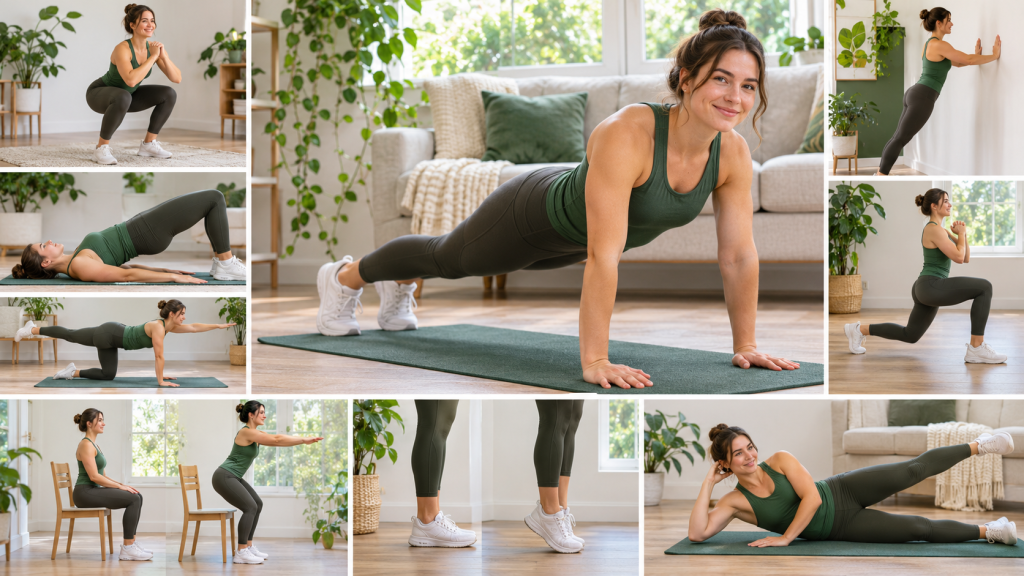
Starting strength training can feel intimidating when you’re new to exercise. You might picture crowded gyms, heavy weights, complicated workout plans, or people who seem to know exactly what they’re doing.
But you don’t need a gym membership or expensive equipment to begin building strength.
In fact, beginner strength training at home can start with simple movements using your own body weight, a clear space, and a little time set aside during the week.
Whether you work at a desk, spend much of your day sitting, or simply want to feel more comfortable with everyday movement, learning a few basic exercises can be a practical first step.
In this guide, we’ll cover eight beginner-friendly strength exercises, how to perform them with good control, common mistakes to avoid, and a simple weekly routine you can adjust to your fitness level.
The goal isn’t to push yourself as hard as possible. It’s to build confidence, learn the movements, and develop an exercise habit you can maintain.
Table of Contents
What Is Strength Training, and Why Does It Matter?
Strength training, sometimes called resistance training, involves making your muscles work against resistance.
That resistance might come from dumbbells, machines, exercise bands, or your own body weight.
When you do a controlled squat, push against a wall, or lift your hips during a glute bridge, you’re asking specific muscles to work.
Over time, appropriately challenging strength exercises can help improve muscular strength and endurance. They can also support everyday activities, such as getting up from a chair, carrying groceries, and climbing stairs.
According to the Centers for Disease Control and Prevention (CDC), adults should include muscle-strengthening activities on at least two days each week, working the major muscle groups.
These activities complement aerobic exercise, such as walking.
You don’t have to meet every guideline immediately. Starting with manageable movements and gradually building your routine is a worthwhile approach.
Can You Build Strength Without Weights?
Yes. Bodyweight exercises can provide useful resistance, especially for people who are new to strength training.
For example, getting out of a chair requires effort from your leg and hip muscles. Repeating that movement in a controlled way can become a basic strength exercise.
As movements become easier, you can gradually adjust repetitions, range of motion, or exercise variations.
However, bodyweight exercises aren’t always a complete replacement for equipment. Some muscle groups, particularly those involved in pulling movements, are harder to challenge effectively without weights or resistance bands.
For a beginner, the important first step is learning safe, comfortable movement patterns.
Before You Start: Set Up a Safe Workout Space
You don’t need a dedicated home gym. A small, uncluttered area with enough room to move can work well.
Before exercising, make sure the floor is clear of loose objects, slippery rugs, and anything you might trip over.
Wear comfortable clothes and supportive footwear when appropriate. Keep some water nearby, and use a sturdy chair for exercises that require one.
Avoid chairs with wheels, damaged furniture, or unstable surfaces.
Start at a Comfortable Level
The number of repetitions in this article is a starting suggestion, not a requirement.
If an exercise feels challenging after four repetitions, begin there. If you can complete eight repetitions with good control, that may be a reasonable starting point.
Move slowly enough to maintain your position, and avoid holding your breath.
Stop if you experience sharp pain, dizziness, chest pain, or unusual shortness of breath. Seek urgent medical care for potentially serious symptoms.
If you have an existing injury, recent surgery, significant balance difficulties, or a condition that may affect exercise safety, ask a qualified healthcare professional about appropriate modifications before starting.
Warm Up for Three to Five Minutes
A gentle warm-up helps you transition from sitting or resting into movement.
Try a few minutes of comfortable marching in place, shoulder rolls, easy walking around the room, and gentle arm movements.
You should feel ready to move, not exhausted.
A warm-up doesn’t have to be complicated, and it shouldn’t involve forcing your joints into uncomfortable positions.
8 Simple Strength Training Exercises You Can Do at Home
These exercises focus on beginner-friendly movements for your legs, hips, upper body, and trunk.
You can perform them individually or combine selected movements into a short routine.
For your first few sessions, focus more on technique than the number of repetitions.
1. Chair Sit-to-Stands
Chair sit-to-stands are a practical way to work your legs and hips using an everyday movement.
They can help you practice standing up and sitting down with better control.
How to do it:
- Place a sturdy, non-rolling chair against a wall.
- Sit with your feet flat on the floor, approximately hip-width apart.
- Lean forward slightly from your hips while keeping your back comfortable.
- Push through your feet and stand up slowly.
- Lower yourself back into the chair with control.
Beginner starting point: Try 5–8 repetitions.
Muscles involved: Thighs and hips, with your trunk helping stabilize the movement.
Common mistake: Dropping quickly into the chair rather than lowering yourself gradually.
Make it easier: Use your hands on the chair’s armrests for assistance if the chair is designed for that purpose.
Make it more challenging: Gradually reduce hand assistance, provided you can remain stable.
You don’t need to squat deeply. Use a comfortable range that doesn’t cause pain.
2. Wall Push-Ups
Wall push-ups provide a gentler introduction to pushing exercises than standard floor push-ups.
They work your chest, shoulders, and arms while allowing you to adjust the challenge.
How to do it:
- Stand facing a sturdy wall.
- Place your palms against the wall at approximately shoulder height and width.
- Step your feet back slightly so your body forms a gentle incline.
- Bend your elbows and slowly bring your upper body toward the wall.
- Press through your hands to return to the starting position.
Beginner starting point: Try 6–10 repetitions.
Muscles involved: Chest, shoulders, and triceps.
Common mistake: Letting your lower back sag or lifting your shoulders toward your ears.
Make it easier: Stand closer to the wall.
Make it more challenging: Move your feet a little farther from the wall while keeping your body controlled and your footing secure.
Avoid pushing through shoulder, elbow, or wrist pain.
3. Standing Calf Raises
Calf raises strengthen muscles in the lower legs that help with everyday movements such as walking and climbing stairs.
They are simple to perform but still require balance.
How to do it:
- Stand behind a sturdy chair or near a secure countertop.
- Rest your hands lightly on the support.
- Keep your feet approximately hip-width apart.
- Slowly lift your heels so you’re rising onto the balls of your feet.
- Pause briefly, then lower your heels with control.
Beginner starting point: Try 8–12 repetitions.
Muscles involved: Calves.
Common mistake: Bouncing up and down or moving too quickly.
Make it easier: Keep both hands on the support and lift your heels only as high as feels comfortable.
Make it more challenging: Pause slightly longer at the top, while maintaining your balance.
Avoid standing on a stair edge or raised platform when you’re just starting.
4. Glute Bridges
Glute bridges are a floor-based exercise for the hips and back of the body.
You’ll need a comfortable, stable floor surface or an exercise mat.
How to do it:
- Lie on your back with your knees bent.
- Keep your feet flat on the floor, approximately hip-width apart.
- Rest your arms comfortably beside you.
- Gently tighten your abdominal muscles and squeeze your buttocks.
- Lift your hips a short distance while keeping your shoulders on the floor.
- Slowly lower your hips back down.
Beginner starting point: Try 6–10 repetitions.
Muscles involved: Glutes, with assistance from other hip and trunk muscles.
Common mistake: Arching your lower back excessively to raise your hips higher.
Make it easier: Lift only a small distance.
Make it more challenging: Add a brief pause at the top when the basic movement feels comfortable.
If lying on the floor is difficult, skip this exercise and choose a comfortable standing alternative after discussing suitable options with a qualified professional if needed.
5. Standing Side Leg Raises
Standing side leg raises can help work the muscles along the sides of your hips.
Those muscles contribute to hip control and stability during everyday movement.
How to do it:
- Stand upright beside a sturdy countertop or chair.
- Hold the support gently for balance.
- Keep your toes pointing forward.
- Slowly move one leg a short distance out to the side.
- Keep your upper body relatively upright.
- Return the leg to the starting position with control.
Beginner starting point: Try 6–10 repetitions on each side.
Muscles involved: Hip abductors, including muscles along the outer hips.
Common mistake: Leaning your body sharply to the opposite side.
Make it easier: Use a smaller range of movement.
Make it more challenging: Slow the lowering phase without compromising balance.
Avoid swinging the leg or trying to lift it as high as possible.
6. Bird-Dog
The bird-dog is a gentle exercise for practicing trunk stability and coordinated movement.
It involves moving an arm and the opposite leg while keeping your body relatively steady.
How to do it:
- Start on your hands and knees on a comfortable mat.
- Position your hands roughly beneath your shoulders and knees beneath your hips.
- Keep your neck in a comfortable, neutral position.
- Slowly extend one arm forward.
- If stable, extend the opposite leg behind you.
- Pause briefly and return to the starting position.
- Switch sides.
Beginner starting point: Try 4–6 controlled repetitions per side.
Muscles involved: Trunk, back, shoulders, and hips.
Common mistake: Twisting your hips or arching your lower back to lift the leg higher.
Make it easier: Move only one arm or one leg at a time. You can also begin with a smaller range of motion.
Make it more challenging: Gradually extend the pause while maintaining a steady posture.
If the position is uncomfortable for your knees or wrists, choose another exercise that better suits you.
7. Wall Slides
Wall slides are a gentle upper-body exercise that encourages controlled shoulder and upper-back movement.
They aren’t a complete replacement for pulling exercises, but they can be a useful part of a beginner routine focused on shoulder control.
How to do it:
- Stand facing a wall.
- Place your forearms against it at a comfortable height.
- Keep your shoulders relaxed and your feet secure.
- Slowly slide your forearms upward a short distance.
- Lower them again without forcing the movement.
Beginner starting point: Try 6–8 slow repetitions.
Muscles involved: Muscles that help control the shoulders and shoulder blades.
Common mistake: Forcing the arms overhead or arching the lower back.
Make it easier: Use a smaller, pain-free range.
Make it more challenging: Increase your comfortable range gradually, without adding strain.
If you have a shoulder injury or restricted shoulder movement, seek individualized guidance rather than pushing through discomfort.
8. Standing Knee Raises
Standing knee raises involve lifting one knee at a time while remaining upright.
This movement can help challenge the hip flexors and trunk control, with an additional balance component.
How to do it:
- Stand near a sturdy countertop or chair for support.
- Keep your feet hip-width apart.
- Slowly lift one knee a comfortable distance.
- Pause briefly without leaning backward.
- Lower your foot and repeat on the other side.
Beginner starting point: Try 6–10 repetitions on each side.
Muscles involved: Hip flexors and trunk stabilizers.
Common mistake: Swinging your leg quickly or leaning far backward.
Make it easier: Keep both hands on a secure support and lift your knee only a few inches.
Make it more challenging: Slow down each repetition while maintaining good balance.
This is primarily a light strengthening and balance exercise. It may not provide enough resistance to substantially strengthen the abdominal muscles on its own.
A Simple Beginner Strength Training Routine at Home
You don’t need to perform all eight exercises during your first workout.
Beginning with a few well-controlled movements can make the routine easier to learn and repeat.
Your First Home Strength Session
Try this example routine if the exercises are appropriate for your abilities.
- Warm-up: 3–5 minutes of gentle movement.
- Chair sit-to-stands: 5–8 repetitions.
- Wall push-ups: 6–10 repetitions.
- Standing calf raises: 8–12 repetitions.
- Glute bridges: 6–10 repetitions.
- Bird-dog: 4–6 repetitions per side.
- Cool-down: A few minutes of comfortable walking or gentle movement.
Start with one set of each exercise, take breaks as needed, and stop if your technique becomes difficult to maintain.
This is an introductory routine, not a requirement to complete a fixed amount of work.
As your confidence grows, you can gradually include standing side leg raises, wall slides, and standing knee raises.
Because this equipment-free plan offers limited direct resistance for certain pulling muscles, consider adding suitable pulling exercises later with professional guidance, resistance bands, or other appropriate equipment if your goal is balanced whole-body strength.
How Many Days Should Beginners Train?
The CDC recommends muscle-strengthening activity on at least two days a week for adults.
You might begin with two nonconsecutive strength-training days, such as Monday and Thursday.
Nonconsecutive sessions allow time between workouts, particularly when you’re still learning the movements.
You can also include comfortable walking or other aerobic activity on separate days.
If you’re completely new to exercise, start with less when necessary and build gradually.
A Practical Seven-Day Beginner Workout Schedule
Here’s an example of how to combine light strength work, walking, and rest during your first week.
Monday — Beginner Strength Session
Choose four or five of the exercises above.
Complete one comfortable set of each, focusing on slow movements and good control.
Tuesday — Comfortable Walking
Take a short walk at a pace that suits you.
If you need a starting point, see our 15-Minute Walking Routine for Beginners.
Wednesday — Light Movement or Rest
Take a short walk, move gently around your home, or rest if your body needs recovery.
You don’t have to schedule a workout every day.
Thursday — Second Strength Session
Repeat your chosen exercises.
If the movements feel comfortable, you can maintain the same number of repetitions or make a small adjustment.
There’s no need to increase difficulty every session.
Friday — Easy Walking or Another Enjoyable Activity
Choose something accessible, such as walking, light cycling, or an activity you enjoy.
Keep the effort appropriate for your fitness level.
Saturday — Flexible Activity Day
You might go for a relaxed walk, spend time gardening, or move around while completing household activities.
This doesn’t need to be a structured workout.
Sunday — Rest and Review
Think about which exercises felt comfortable and which ones require more practice.
Choose two suitable days for strength training in the following week.
Consistency is more important than turning every day into a demanding exercise session.
How to Make Bodyweight Exercises More Challenging Over Time
Once the basic movements become easier, you may want to progress.
The goal is to provide an appropriate challenge without sacrificing control.
Gradually Increase Repetitions
If you’re comfortably completing five chair sit-to-stands, you might work toward six or seven.
Small increases can be easier to manage than dramatic changes.
Improve Your Movement Control
Moving with better coordination and a comfortable range of motion is meaningful progress.
You might notice that you can lower yourself into a chair more smoothly or perform wall push-ups without losing your position.
Add Another Set When Appropriate
After you’ve adapted to one set, you may choose to complete a second set of some exercises.
Rest between sets as needed.
The National Institute of Diabetes and Digestive and Kidney Diseases (NIDDK) notes that even one set of strengthening exercises can provide benefits.
Choose a More Challenging Variation
Moving slightly farther from the wall during push-ups or relying less on arm assistance during chair sit-to-stands can increase the challenge.
Only change the difficulty when you can perform the original version comfortably and safely.
You don’t need to chase exhaustion to make progress.
Common Strength Training Mistakes Beginners Should Avoid
A few common habits can make starting exercise unnecessarily uncomfortable or difficult.
Doing Too Much on the First Day
It’s easy to feel motivated and attempt every exercise at once.
But suddenly doing much more activity than your body is accustomed to may lead to soreness and make your new routine harder to maintain.
Start with a manageable amount and progress gradually.
Moving Too Quickly
Rushing through repetitions can make it harder to notice your posture and control.
Slow down enough to understand each movement.
A smaller number of well-controlled repetitions is often more useful for learning than a larger number performed carelessly.
Holding Your Breath
Some people unintentionally hold their breath when an exercise feels challenging.
Try to keep breathing naturally throughout the movement.
For many exercises, exhaling during the harder part and inhaling during the easier part can be a helpful cue.
Ignoring Pain
Some muscle fatigue can occur during strength training, and mild soreness may follow an unfamiliar workout.
Sharp pain, joint pain, dizziness, or other concerning symptoms are not signs that you should keep pushing.
Stop the activity and seek appropriate medical advice if symptoms are concerning or persistent.
Comparing Yourself With More Experienced People
Someone else’s workout schedule may not fit your abilities or circumstances.
Focus on your own comfort, control, and progress.
Even learning how to perform a few movements correctly can be a useful achievement.
Can Strength Training and Walking Work Together?
Absolutely. Walking and strength training offer different but complementary forms of physical activity.
Walking helps you include aerobic movement in your routine, while strength exercises challenge specific muscles.
According to the CDC adult physical activity guidelines, adults should generally aim for 150 minutes of moderate-intensity aerobic activity each week, alongside at least two days of muscle-strengthening activity.
You don’t have to reach those amounts immediately if you’re currently inactive.
Start with what is realistic and gradually work toward recommended activity levels as your abilities allow.
For a practical walking plan, explore our 15-Minute Walking Routine for Beginners.
And if you’re working on broader lifestyle changes, our Healthy Weight Management Habits article explains why everyday habits often work better than extreme approaches.
How to Stay Consistent With Home Strength Training
The biggest challenge isn’t always learning the exercises. Sometimes it’s making room for them during an already busy week.
Keep Your Routine Short
A brief workout that fits your schedule may be easier to repeat than an ambitious routine you rarely have time to complete.
Start with what feels manageable.
Choose a Regular Time
You might prefer exercising before work, during a lunch break, or in the early evening.
There’s no single perfect workout time for everyone.
Choose a time that allows you to move safely and without feeling rushed.
Prepare Your Workout Space
Keep the floor clear and your sturdy chair accessible.
Removing small obstacles can make it easier to follow through with your plans.
Notice Everyday Progress
Progress isn’t limited to the number of repetitions you perform.
You might notice that standing up feels easier, you have better control during an exercise, or you feel more comfortable following the routine.
Those observations can be useful reasons to keep going.
Allow Your Routine to Change
Busy weeks happen.
If you miss a workout, return to your usual routine when possible rather than trying to compensate with an excessively hard session.
A flexible routine is often easier to maintain.
Frequently Asked Questions About Beginner Strength Training at Home
Can Beginners Really Build Strength Without Equipment?
Yes. Bodyweight exercises can provide sufficient resistance to begin developing strength, especially for people who haven’t been doing regular strength training.
As you improve, you may eventually need additional resistance or different exercises to continue challenging all your major muscle groups.
How Long Should a Beginner Strength Workout Last?
There’s no required workout duration that suits everyone.
A short session with a warm-up and several controlled exercises can be a reasonable place to start.
Pay attention to how your body responds rather than trying to reach a specific number of minutes.
Should Beginners Do Strength Training Every Day?
Not necessarily.
Two appropriately spaced strength-training days per week are a practical starting goal for many adults and align with general activity guidelines.
Rest and recovery matter, particularly when exercises are new.
Is Strength Training Better Than Walking?
Neither is automatically better.
Walking provides aerobic activity, while strength training challenges muscles against resistance.
A balanced activity routine can include both.
What if I Can’t Do a Regular Push-Up?
You don’t need to start with floor push-ups.
Wall push-ups offer an easier variation that lets you learn the pushing movement and adjust the difficulty.
Start with whatever variation you can control comfortably.
Is It Normal to Feel Sore After Starting?
Mild muscle soreness can happen when you try unfamiliar exercises.
However, severe pain, significant swelling, weakness, or symptoms that seem unusual shouldn’t be ignored.
Reduce your activity and seek medical advice when appropriate.
Do I Need Protein Supplements to Start Strength Training?
No. Protein supplements aren’t necessary for everyone who begins strength training.
Many people can meet their protein needs through ordinary foods such as eggs, yogurt, beans, lentils, fish, meat, tofu, and other protein-containing foods.
Individual needs vary. A registered dietitian or qualified healthcare professional can help if you have specific nutrition concerns.
For everyday meal ideas, explore our Healthy Meal Planning for Beginners guide.
Can Strength Training Help With Healthy Aging?
Strength exercises can support muscle strength and physical function as people age.
Older adults may also benefit from balance exercises, with appropriate adaptations for health and mobility.
The CDC’s physical activity guidance for older adults provides additional recommendations.
People with significant balance or mobility difficulties may benefit from individualized guidance before attempting unfamiliar exercises.
Final Thoughts: Start With a Few Movements and Build From There
Strength training doesn’t have to mean joining a gym or following a complicated workout program.
For many beginners, a sturdy chair, a clear floor, and a few bodyweight movements are enough to get started.
Choose exercises that fit your abilities, practice them with control, and give yourself time to learn.
You don’t need to master all eight exercises in one day.
The most useful routine is one you can perform safely, adjust as needed, and return to regularly.
Explore More Healthy Movement and Lifestyle Ideas
Looking for other practical ways to build a healthier routine? These Nourish & Trim Hub articles may help:
- 15-Minute Walking Routine for Beginners — a simple way to introduce more daily movement.
- 7 Simple Healthy Habits You Can Start Today — everyday ideas for improving your routine.
- How to Build a Better Sleep Routine — practical habits that support consistent, restful sleep.
- Healthy Meal Planning for Beginners — convenient ideas for planning balanced meals.
- 15 High-Protein Snacks for Work: Easy, Budget-Friendly Ideas — practical, protein-rich snack ideas for busy workdays.
You can also get our Free 7-Day Healthy Habits Starter Guide for simple daily ideas involving food, movement, hydration, and general wellness.
Start with what feels manageable, keep your expectations realistic, and remember that steady progress matters more than doing everything perfectly.
Disclaimer: This article is intended for general educational purposes and does not replace personalized medical advice, physical therapy, or an individualized exercise program. People with injuries, chronic conditions, mobility limitations, or other health concerns should seek appropriate professional guidance before beginning unfamiliar exercises.