
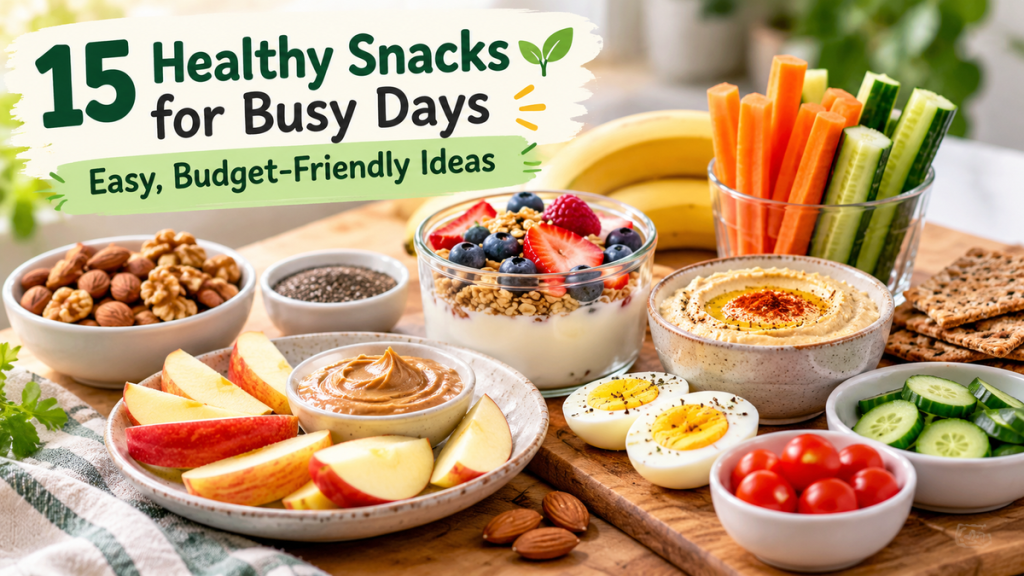
Busy days can make snacking feel like an afterthought. Between work, errands, family responsibilities, and everything else on your schedule, it’s easy to grab whatever is nearby when hunger strikes.
But finding a satisfying snack doesn’t have to mean buying expensive health foods or spending hours preparing something from scratch. Many everyday ingredients—like fruit, yogurt, eggs, oats, beans, and nuts—can become simple snacks with very little effort.
In this guide, you’ll find 15 healthy snacks for busy days that are easy to prepare, budget-conscious, and flexible enough to fit different tastes and routines. Whether you need something for your work break, an afternoon snack at home, or a quick bite on the go, there’s plenty of room to keep things simple.
Table of Contents
15 Healthy Snacks for Busy Days
1. Apple Slices With Peanut Butter
Apple slices with peanut butter are an easy option when you want something crunchy, naturally sweet, and satisfying. Apples provide fiber, while peanut butter adds fat and some protein, making this a more filling combination than fruit alone.
How to prepare: Wash and slice one medium apple, then serve it with one or two tablespoons of peanut butter. Choose a peanut butter without added sugar if you prefer a simpler ingredient list.
Budget-friendly tip: Buy apples in larger bags when they’re reasonably priced, and use store-brand peanut butter to help keep costs down.
Make-ahead idea: Pack the peanut butter separately and slice the apple shortly before eating. If you prepare apple slices ahead of time, a little lemon juice can help slow browning. Keep cut fruit refrigerated until you’re ready to take it with you.
2. Plain Greek Yogurt With Berries
A bowl of plain Greek yogurt and berries is a convenient snack when you’re looking for something creamy and refreshing. Greek yogurt provides protein, while berries contribute fiber and flavor.
How to prepare: Spoon about three-quarters of a cup of plain Greek yogurt into a bowl. Add a small handful of strawberries, blueberries, raspberries, or another fruit you enjoy. For extra texture, sprinkle a tablespoon of rolled oats on top.
Budget-friendly tip: Frozen berries can be a practical alternative to fresh berries, especially when fresh prices are high. Thaw a small portion in the refrigerator before serving.
Make-ahead idea: Portion yogurt into covered containers and keep the fruit separately until you’re ready to eat. Store everything chilled.
If you avoid dairy, try an unsweetened dairy-free yogurt. Check the nutrition label, since protein content varies considerably among alternatives.
3. Carrot Sticks With Hummus
Carrots and hummus make a colorful, crunchy snack without much preparation. The vegetables provide fiber, while hummus adds flavor and some protein from chickpeas.
How to prepare: Wash and cut carrots into sticks. Serve them with two or three tablespoons of hummus. Cucumber slices and bell pepper strips also work well.
Budget-friendly tip: Whole carrots are often less expensive than pre-cut snack packs. You can also make hummus at home using canned chickpeas, lemon juice, olive oil, and seasonings.
Make-ahead idea: Prepare a few vegetable portions for the next couple of days and store them in covered containers in the refrigerator.
For variety, try different hummus flavors or add a pinch of paprika.
4. Hard-Boiled Egg With Whole-Grain Crackers
Sometimes the most useful snack is one that requires almost no decision-making. A hard-boiled egg with a few whole-grain crackers is a straightforward combination that provides protein and carbohydrates.
How to prepare: Cook an egg until the yolk and white are firm, cool it promptly, and refrigerate it. When you’re ready for a snack, pair it with a few whole-grain crackers.
Budget-friendly tip: Eggs can be an economical protein option, depending on local prices. Compare the cost per egg rather than assuming the largest carton is always the best deal.
Make-ahead idea: Prepare a small batch of hard-boiled eggs and keep them refrigerated. Use them within one week.
If you need to carry this snack to work, pack the egg in an insulated lunch bag with a cold pack.
5. Banana and Oat Energy Bites
Homemade banana and oat bites are useful when you want something easy to grab from the refrigerator. They’re also a way to use a ripe banana that might otherwise go to waste.
How to prepare: Mash one ripe banana and mix it with about one cup of rolled oats and two tablespoons of peanut butter. Add a little cinnamon if you like. Form the mixture into small bites, then refrigerate until firm.
The texture will be soft rather than crunchy. If the mixture seems too sticky, add a few more oats.
Budget-friendly tip: Rolled oats are versatile and usually cost less per serving than individually packaged snack bars.
Make-ahead idea: Store the bites in a covered container in the refrigerator and use them within a few days, or freeze portions for longer storage.
You can substitute an appropriate seed butter if peanut butter isn’t suitable for your household.
6. Cottage Cheese With Peaches
Cottage cheese and peaches make a quick snack that balances creamy and sweet flavors. Cottage cheese provides protein, while peaches add fruit and variety.
How to prepare: Add about half a cup of cottage cheese to a small bowl. Top it with sliced fresh peaches or canned peaches packed in water or juice.
Budget-friendly tip: Canned fruit can be economical and convenient because it keeps longer than fresh produce. Compare prices and look for options without added sugar.
Make-ahead idea: Keep the cottage cheese chilled and add the fruit shortly before eating.
Not a fan of peaches? Try berries, pineapple, or another fruit you enjoy.
7. Homemade Trail Mix
Trail mix is convenient for busy days because it requires no cooking and can be carried in a small container. Making your own also lets you choose the ingredients and control how much you pack.
How to prepare: Combine unsalted nuts, pumpkin seeds, and a little dried fruit. A small handful can make a convenient snack between meals.
Budget-friendly tip: Compare the unit price of larger packages with single-serving packs. Store-brand nuts, seeds, and raisins may cost less than premixed trail mix.
Make-ahead idea: Divide the mixture into small reusable containers at the start of the week.
Trail mix can be energy-dense, so portioning it ahead may be useful if you tend to eat straight from a large bag.
For a nut-free version, use seeds and dried fruit, checking labels carefully for allergens and cross-contact warnings.
8. Air-Popped Popcorn With Simple Seasonings
Popcorn doesn’t have to be reserved for movie night. Plain, air-popped popcorn is a whole-grain snack with a light, crunchy texture.
How to prepare: Make a batch using an air popper or a suitable stovetop method. Add a little olive oil if desired, along with cinnamon, garlic powder, or another seasoning you enjoy.
Budget-friendly tip: Plain popcorn kernels can be less expensive per serving than ready-to-eat flavored popcorn.
Make-ahead idea: Once the popcorn has cooled, store it in an airtight container to help maintain its crunch.
Be mindful of heavily salted or buttery toppings if you’re trying to reduce sodium or saturated fat.
9. Crispy Roasted Chickpeas
Roasted chickpeas are a good option when you’re craving something savory and crunchy. Chickpeas contribute fiber and plant-based protein, and canned varieties make preparation straightforward.
How to prepare: Drain and rinse a can of chickpeas. Pat them dry, toss with a little olive oil and your preferred seasonings, and spread them on a baking sheet. Roast at approximately 400°F until browned and crisp, usually around 20–30 minutes, stirring occasionally. Cooking time varies by oven, so check them as they roast.
Budget-friendly tip: Store-brand canned chickpeas work well. Cooking dried chickpeas can also be economical if you have time.
Make-ahead idea: Prepare a batch when you’re already using the oven. Let the chickpeas cool before packing them.
Their crispness may soften in storage, so they’re often best enjoyed soon after preparation. Keep any soft or moist leftovers refrigerated.
10. Whole-Grain Toast With Avocado
Avocado toast is quick to assemble and easy to adapt. Whole-grain bread provides fiber, while avocado adds unsaturated fat and a creamy texture.
How to prepare: Toast one slice of whole-grain bread and spread it with mashed avocado. Finish with lemon juice, black pepper, or a pinch of seasoning.
Budget-friendly tip: Avocado prices vary. Buy them when they’re reasonably priced, or choose another topping—such as mashed beans—when avocados are expensive.
Make-ahead idea: Toast the bread when you’re ready to eat. Avocado tastes and looks best when prepared close to serving time.
For a more substantial snack, add sliced tomato or a little cooked egg.
11. Cheese, Grapes, and Whole-Grain Crackers
A small snack plate can feel more satisfying than grabbing one ingredient on its own. Cheese, grapes, and whole-grain crackers provide a mix of flavors and textures.
How to prepare: Place a small portion of cheese, a handful of washed grapes, and several whole-grain crackers on a plate or in a lunch container.
Budget-friendly tip: Buying a block of cheese and slicing it yourself may cost less than purchasing individually wrapped portions.
Make-ahead idea: Assemble the refrigerated items in a covered container and keep the crackers separate to prevent them from becoming soft.
For young children, grapes should be cut appropriately to reduce choking risk. Whole grapes are not a suitable grab-and-go snack for every age group.
12. Steamed Edamame With a Little Sea Salt
Edamame, or young soybeans, can be a useful change from the usual fruit-and-cracker snacks. It provides plant-based protein and fiber.
How to prepare: Cook frozen edamame according to the package directions. If using edamame in pods, remove the beans from the pods before eating. Season lightly with salt, pepper, or lemon juice.
Budget-friendly tip: Check the frozen vegetable section for plain edamame. Compare the price per ounce with seasoned snack packages.
Make-ahead idea: Cook an extra portion and refrigerate it promptly for another snack.
Soy is a major food allergen, so this option isn’t suitable for everyone.
13. Mini Whole-Wheat Pita Pizza
A mini pita pizza can work well when you’re in the mood for something warm and savory. It uses a few familiar ingredients and can be adjusted to what you have on hand.
How to prepare: Spread a little tomato sauce on a small whole-wheat pita. Add shredded mozzarella and finely chopped vegetables, such as bell pepper or spinach. Heat in the oven until the cheese melts and the toppings are heated through.
Budget-friendly tip: Use leftover vegetables from other meals rather than buying special pizza toppings.
Make-ahead idea: Keep the ingredients ready in the refrigerator and assemble the pita when you’re ready to eat.
This can be a larger snack or a light meal, depending on the pita size and toppings. Adjust the portion to your appetite.
14. A Simple Fruit and Yogurt Smoothie
A homemade smoothie is convenient when you prefer something you can drink. It can also help you use frozen fruit and yogurt already in your kitchen.
How to prepare: Blend half a banana, a handful of frozen berries, half a cup of plain yogurt, and enough milk or unsweetened fortified soy beverage to reach your preferred consistency.
Budget-friendly tip: Frozen fruit is useful because you can take out only what you need. There’s no need to purchase expensive smoothie powders or specialty ingredients.
Make-ahead idea: Freeze fruit portions in individual containers or bags. Blend with the refrigerated ingredients when you’re ready.
A smoothie is not automatically a better choice than whole fruit. Choose whichever option suits your schedule, appetite, and preferences.
15. Cucumber and White Bean Snack Cups
If you prefer savory snacks, a simple bean-and-vegetable cup is an affordable way to add variety. White beans provide fiber and plant-based protein, while cucumber contributes freshness and crunch.
How to prepare: Drain and rinse canned white beans. Mix a small portion with diced cucumber, a little olive oil, lemon juice, and black pepper. Add chopped parsley if you have some.
Budget-friendly tip: One can of beans can be divided across several meals or snacks. Use the rest in soup, salad, or a grain bowl.
Make-ahead idea: Prepare a few portions in covered containers and refrigerate promptly. For the freshest texture, add cucumber close to serving time.
You can also swap white beans for black beans or chickpeas depending on what’s available.
Convenient Whole-Grain Snacks for Busy Days
Whole-grain snacks can be a convenient option when you’re juggling work, errands, and family responsibilities. Many require little preparation, and some are easy to pack for a busy day.
If you’re wondering which convenient whole-grain snacks work well for busy days, here are five practical ideas:
- Air-popped popcorn: Prepare a batch of plain popcorn and add your favorite herbs or seasonings. It’s a simple whole-grain snack that’s easy to portion into containers.
- Whole-grain crackers with hummus: Pair crackers with hummus for a combination of grains and plant-based protein. Pack the hummus in a chilled container if you’re taking it to work.
- Whole-wheat pita with white bean dip: Cut a whole-wheat pita into small triangles and serve with a homemade or store-bought white bean dip.
- Whole-grain toast with avocado: Top a slice of whole-grain bread with mashed avocado and a little lemon juice. This works particularly well when you’re eating at home.
- Oatmeal with fruit: Prepare a small bowl of plain oatmeal and add berries, banana slices, or chopped nuts for a more filling option.
How to choose whole-grain snacks at the store: Check the ingredient list rather than relying only on packaging claims. Look for ingredients such as whole-wheat flour, whole oats, or whole-grain corn near the beginning of the list. Also compare fiber, added sugar, and sodium when choosing packaged products.
The American Heart Association’s healthy snacking guide includes practical suggestions such as popcorn, whole-grain crackers, and whole-grain toast.
You don’t need to purchase expensive specialty foods. Familiar ingredients and simple combinations can make whole-grain snacking both convenient and budget-friendly.
How to Choose a Snack That Fits Your Day
There isn’t one perfect snack for every person or every situation. What works depends on your appetite, activity level, preferences, food allergies, and how long it will be until your next meal.
A few simple questions can help.
Are You Looking for Something Light or More Filling?
If your next meal is coming soon, a piece of fruit or some vegetables may be enough.
If you have several hours before dinner, you may prefer a combination that includes protein, fiber, or fat—such as yogurt with berries, crackers with an egg, or hummus with vegetables.
You don’t need to calculate every nutrient to make a useful choice. Think about what will satisfy you and help you get through your day comfortably.
Can You Store It Safely?
A bag of plain popcorn or an unopened package of suitable shelf-stable food can be convenient when refrigeration isn’t available.
Snacks containing yogurt, eggs, cheese, cooked beans, or other perishable ingredients need proper cold storage. If you take them to work or school, use a refrigerator or insulated lunch bag with a cold pack.
Does It Fit Your Preferences and Needs?
Not everyone likes the same flavors or can eat the same foods. If you avoid dairy, nuts, soy, wheat, or another ingredient, look for a suitable alternative rather than forcing yourself to follow a specific snack list.
A healthy eating routine should be flexible enough to work in your everyday life.
How to Save Money on Healthy Snacks
Healthy snacking doesn’t require a cart full of specialty products. Many useful ingredients are available in ordinary grocery stores, and a little planning can help reduce waste.
1. Start With What You Already Have
Check your pantry, refrigerator, and freezer before shopping. You might already have oats, popcorn kernels, beans, crackers, peanut butter, or frozen fruit that can become a snack.
Building snacks around ingredients you own is often easier than following a new recipe with a long shopping list.
2. Compare Unit Prices
The largest package isn’t always the best value. Look at the unit price on shelf labels to compare different sizes and brands.
This can be especially helpful for yogurt, nuts, cheese, oats, and other frequently purchased snack ingredients.
3. Choose Fresh, Frozen, or Canned Produce
Fresh produce can be appealing, but it isn’t the only option. Frozen berries, frozen vegetables, and canned fruit or beans can be useful when you want ingredients that keep longer.
Choose options that fit your needs and check labels for added sugars or sodium when relevant.
4. Use Ingredients Across Multiple Snacks
A short shopping list can work for several ideas:
- Apples: Pair with peanut butter or add to yogurt.
- Oats: Use in banana bites or sprinkle over yogurt.
- Chickpeas: Make hummus or roasted chickpeas.
- Carrots: Serve with hummus or add to other meals.
- Plain yogurt: Use for a fruit bowl or smoothie.
- Whole-grain crackers: Pair with eggs, cheese, or bean spreads.
Using the same ingredients in different ways can make shopping more practical without making every snack taste the same.
5. Skip the Pressure to Buy Specialty Foods
A snack doesn’t become healthier simply because its packaging uses words like natural, clean, or superfood.
Everyday options such as fruit, plain yogurt, beans, eggs, and whole grains can be practical choices. Focus on ingredients you’ll actually eat rather than products that sound impressive.
Easy Snack Prep for a Busy Week
You don’t need a complicated meal-prep routine to make snacks more accessible. Even 15 or 20 minutes of planning can make a difference in how smoothly your week goes.
Keep a Small Snack List
Choose three or four options that suit your routine. For example:
- Apple slices and peanut butter
- Plain Greek yogurt with fruit
- Carrot sticks and hummus
- Air-popped popcorn
You can rotate these throughout the week instead of preparing all 15 ideas at once.
Prepare Only What You’ll Use
Wash and portion produce, boil a few eggs, or divide dry trail mix into containers. Avoid preparing large amounts of perishable food if you’re unlikely to finish it while it’s fresh.
Keep wet and dry ingredients separate when doing so helps preserve texture.
Make Food Safety Part of Your Routine
Wash your hands and produce before preparation, use clean containers, and refrigerate foods that require chilling.
According to the Centers for Disease Control and Prevention (CDC), perishable foods should generally be refrigerated within two hours, or one hour when temperatures are above 90°F. Keep your refrigerator at 40°F or below.
If you’re packing snacks for a long commute or a warm day outdoors, plan how you’ll keep perishable items cold.
Also, check ingredient labels when preparing snacks for someone with food allergies. The U.S. Food and Drug Administration (FDA) provides guidance on major food allergens and labeling.
Frequently Asked Questions About Healthy Snacks
What Are Some Healthy Snacks That Require No Cooking?
Whole fruit, plain yogurt, nuts or seeds, whole-grain crackers, and vegetables with ready-made hummus are convenient no-cook options.
You can also assemble a simple snack plate using ingredients already in your refrigerator. Just make sure foods requiring refrigeration are kept cold.
What Are Some Affordable Healthy Snacks for Work?
Apples, bananas, homemade popcorn, roasted chickpeas, and portioned trail mix can be useful options for a workday.
Yogurt, cheese, eggs, and cut vegetables are also convenient when you have access to a refrigerator or a cold pack.
The most affordable option often depends on local grocery prices and what you already buy regularly.
What Are Some Convenient Whole-Grain Snacks for Busy Days?
Whole-grain snacks can be practical choices when you’re short on time. Here are a few easy, budget-friendly options:
- Whole-grain crackers with hummus: Pair crackers with a small serving of hummus for a convenient snack containing fiber and some plant-based protein.
- Air-popped popcorn: Prepare plain popcorn and add a little seasoning. It’s an inexpensive whole-grain option that can be portioned into containers.
- Whole-grain toast with peanut butter: A simple combination of whole grains, fats, and some protein.
- Whole-grain cereal with yogurt: Choose a whole-grain cereal with little added sugar and combine it with plain yogurt and fresh fruit.
Budget tip: Compare unit prices when shopping and buy larger packages only when you can use them before they become stale.
Storage tip: Keep crackers, cereal, and popcorn in sealed containers. Refrigerate yogurt and hummus, and use an insulated lunch bag with a cold source when transporting them.
When shopping, check the ingredient list for whole grains or whole wheat rather than relying only on front-of-package claims. You don’t need expensive specialty foods to prepare satisfying snacks.
How Can I Make a Snack More Filling?
Try pairing different types of foods instead of relying on one ingredient. For example, combine fruit with peanut butter, vegetables with hummus, or whole-grain crackers with an egg.
Protein, fiber, and fat can contribute to how satisfying a snack feels, although appetite and individual needs vary.
Are Packaged Snacks Always Unhealthy?
No. Packaged foods vary widely in ingredients and nutritional content.
Plain nuts, unsweetened yogurt, whole-grain crackers, and canned beans are examples of packaged foods that can fit into a balanced eating routine.
Read labels when useful, paying attention to ingredients, serving size, sodium, added sugars, and any relevant allergens.
Can Healthy Snacks Be Part of a Weight Management Routine?
Yes. Snacks can fit into a weight management routine, but no individual snack guarantees weight loss.
Your overall eating pattern, activity, sleep, medical circumstances, and personal needs matter more than labeling a particular food as good or bad.
Choose amounts that suit your hunger and routine. For individualized guidance, especially if you have a medical condition or specific dietary needs, consider speaking with a registered dietitian or qualified healthcare professional.
How Many Snacks Should I Eat Each Day?
There isn’t one snack schedule that works for everyone. Some people prefer three meals without snacks, while others find a snack between meals helpful.
Pay attention to your hunger, daily schedule, and personal needs. You don’t need to eat a snack simply because a certain time appears on the clock.
Keep Healthy Snacking Simple
Healthy snacks don’t have to be complicated, expensive, or perfectly prepared.
A sliced apple, a small bowl of yogurt, or vegetables with hummus can be just as useful as a carefully planned recipe. What matters is having options that fit your budget, preferences, and daily routine.
Start by choosing two or three snacks from this list. Add their ingredients to your next grocery trip, and see which ones are easiest to keep on hand. Over time, you can build a collection of reliable favorites without needing to plan every bite.
Explore More Healthy Eating Ideas
If you’re looking for more ways to make everyday meals and routines easier, these Nourish & Trim Hub guides may help:
- 10 Easy Healthy Breakfast Ideas for Busy Mornings — simple breakfast options for rushed mornings.
- Healthy Meal Planning for Beginners: A Simple 7-Day Guide — practical meal-planning tips, grocery ideas, and a weekly plan.
- 7 Simple Healthy Habits You Can Start Today — realistic habits you can fit into daily life.
- 15 High-Protein Snacks for Work: Easy, Budget-Friendly Ideas — Discover 15 affordable, protein-rich snack ideas for work, including easy meal-prep options and practical food-storage tips.
- 12 Easy Healthy Lunch Ideas for Work: Budget-Friendly Meals You Can Prep Ahead — Simple, affordable workday lunches with meal-prep tips and a practical five-day plan.
Want a little help getting started? You can also get your Free 7-Day Healthy Habits Starter Guide and begin with small, manageable changes.
Healthy eating is easier to maintain when it works with your real life—not against it.
Disclaimer: This article provides general nutrition and wellness information and is not a substitute for personalized medical or dietary advice. Individual nutritional needs and food-allergy considerations vary.
Pingback: 10 Easy Healthy Breakfast Ideas for Busy Mornings